2 March 2026
The Trump administration has signalled deep concern about the state of free speech in the UK and across Europe, launching a new online portal designed to help citizens circumvent restrictive digital laws.
Since President Trump returned to office, senior figures within his administration — including Vice President JD Vance, Secretary of State Marco Rubio and Under Secretary of State for Public Diplomacy Sarah Rogers — have repeatedly raised alarm over the erosion of free expression in Europe.
At the centre of these concerns are sweeping regulatory regimes such as the EU's Digital Services Act (DSA) and the UK's Online Safety Act. Last August, a delegation from the influential US House Judiciary Committee — which includes close allies of President Trump — visited several European cities as part of an investigation into censorship and its impact on American technology companies.
The UK's Online Safety Act was introduced as legislation intended to protect children from online harm. However, critics argue that Ofcom, the Act's regulator, has demonstrated extraterritorial ambitions that could pose a threat to the First Amendment rights of US citizens and to American businesses operating overseas.
Under the Act, Ofcom has the power to fine social media platforms up to £18 million or 10 per cent of their global annual turnover — whichever is higher — if they fail to remove content deemed harmful. The UK Government has also indicated it would support Ofcom should it move to restrict access to X following controversy surrounding the platform's AI tool, Grok, which was capable of generating sexualised deepfakes.
Elsewhere in Europe, authorities have also taken action against X. French officials recently raided the company's Paris headquarters, while Elon Musk has launched a landmark legal challenge against a €120 million fine — the first of its kind issued under the EU's Digital Services Act.
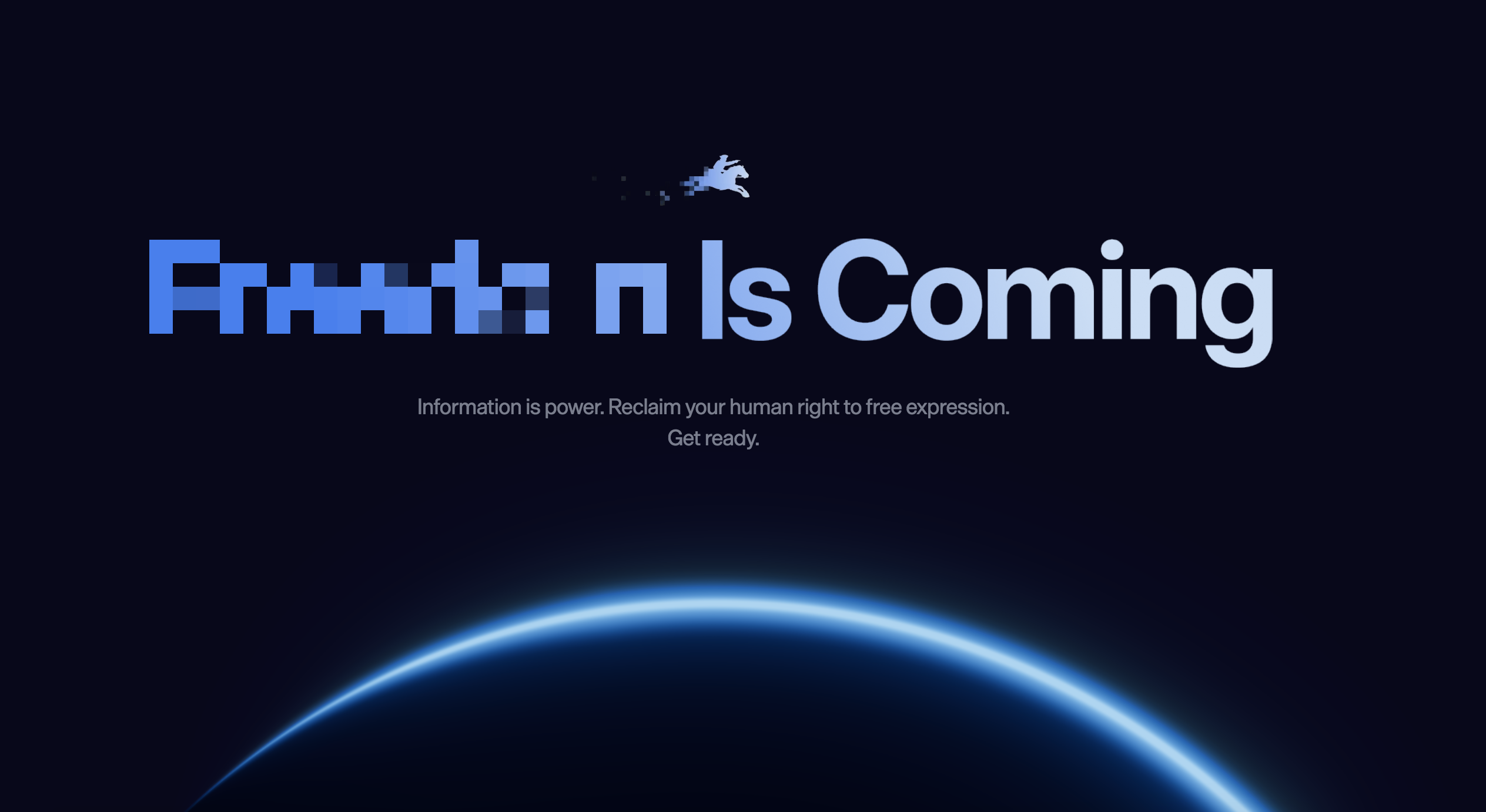
In one of the most striking interventions to date, the US State Department has launched a new VPN-style website, freedom.gov, aimed at helping users overseas access websites blocked by what it describes as censorious online regimes. The platform is designed to enable users to mask their identities and avoid tracking by domestic authorities.
Launched on 12 January, the website carries the message: "Freedom is coming. Information is power. Reclaim your human right to free expression. Get ready."
Sarah Rogers, Under Secretary of State for Public Diplomacy and President Trump's free speech tsar, has been among the administration's most outspoken critics of the UK Government's approach. Speaking to The Sun, she said she believed the Labour Government had "telegraphed authoritarian intentions" in relation to freedom of speech. She added that "digital freedom is a priority for the State Department", including the promotion of privacy and censorship-circumvention technologies such as VPNs.
The new portal represents the latest expression of US concern over the direction of free speech policy in Europe. It also forms part of a broader strategy set out in the recently published US National Security Strategy, which warns of the "prospect of civilisational erasure" if core freedoms are not defended.
News of the website emerged in the same week as reports that the Trump administration was considering granting political asylum to Hamit Coskun should he lose his blasphemy case in the UK. Ms Rogers has also indicated in recent months that individuals prosecuted in the UK for social media posts — including Lucy Connolly — may wish to consider seeking asylum in the United States.
European leaders can no longer ignore mounting concerns about the state of free expression. If they fail to address the rapid retreat of free speech protections in their own jurisdictions, the US appears increasingly willing to intervene.