Anti-Free Speech Hostility: The Islamist Links of the Government's Working Group on Islamophobia
1 March 2026
The Islamist Links of the Government's Working Group on Islamophobia
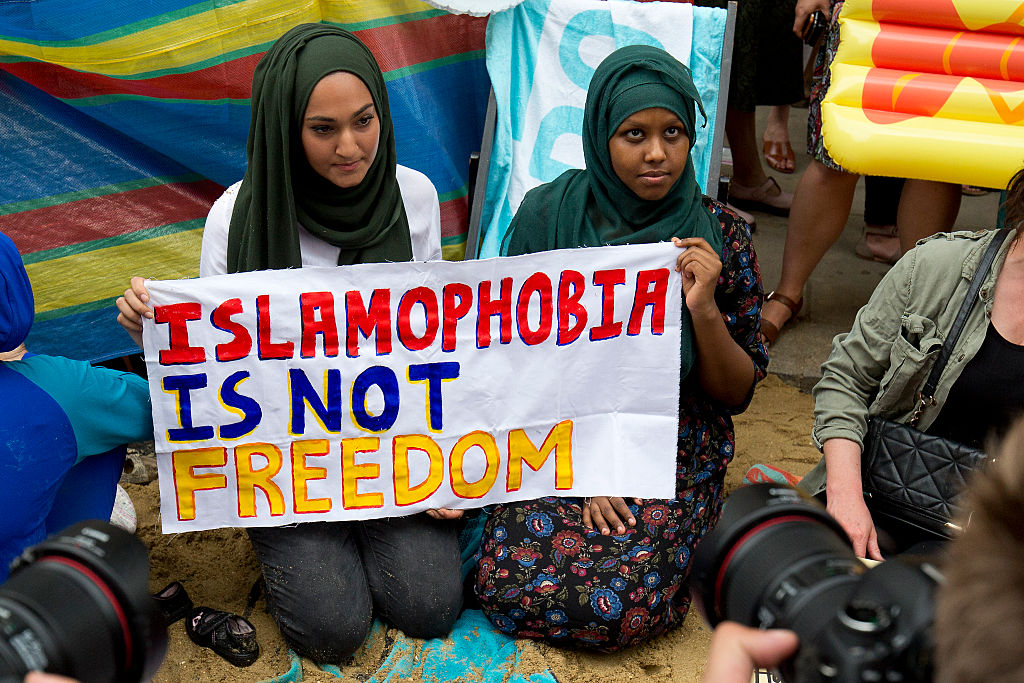
The adoption of an official, government-recognised definition of Islamophobia is a demand made for many years by organisations such as the Muslim Council of Britain (MCB) and Muslim Engagement and Development (MEND), in which leading members have also had a lengthy history of expressing extreme, Islamist views. It came closest to realisation when the All-Party Parliamentary Group on British Muslims issued a report containing such a definition in 2018. This was denounced by free speech advocates and liberal, secularist Muslims, who saw the APPG definition – that Islamophobia is “rooted in racism and a type of racism that targets expressions of Muslimness or perceived Muslimness” – as likely to restrict public debate, as well as criticism of the Islamic faith. The APPG’s co-Chair at the time was Wes Streeting, who is now a strong contender to succeed Sir Keir Starmer as Prime Minister.
In February 2025, the-then Communities Secretary Angela Rayner appointed a new five-member Working Group to deliver a definition of “Anti-Muslim Hatred/Islamophobia”. It is thought to have done so in October, although its report has not been published and FOI requests seeking to obtain it by the Free Speech Union have been refused. Leaks confirmed by one group member suggest that instead of the terms specified in its remit, it has instead produced a definition of “anti-Muslim hostility”. The FSU considers this to be no improvement, and likely, in the words of our Director Lord Young, to make it difficult to refer to Muslims doing anything wrong, granting them protections that people of other faiths don’t enjoy. Given that we already have laws against hate crime and discrimination, any definition would either be pointless, because it would do no more than restate existing legal principles, or would threaten free expression.
When setting up the Working Group, Rayner’s Ministry said it had been chosen as “reflective of a wide range of perspectives and priorities for British Muslims”. This briefing explodes that claim. In fact, four of its five members had already expressed support for the 2018 APPG definition when the Group started work, and none of them was on record as opposing the concept of a definition per se.
There was, for example, no representative from Tell MAMA, a body whose leadership has opposed defining Islamophobia, and which has received some £6 million from the Government to combat anti-Muslim hate crime and support its victims since 2012. Tell MAMA’s grant aid has now ceased – following a campaign against it led by one of the Working Group’s members, Baroness Shaista Gohir, and the husband of another, Nafeez Ahmed. His wife, Working Group member Akeela Ahmed, is now the Chief Executive of a new organisation, the British Muslim Trust, which is set to receive government grants of more than £2.5 million in Tell MAMA’s place, although it did not begin to operate until the autumn of 2025.
This briefing examines the connections and pronouncements of all the Working Group’s members and finds that all of them have links to Islamist individuals or organisations such as the MCB and MEND, including the Group’s Chair, Dominic Grieve KC. Grieve, the only member of the Group who is not a Muslim, wrote a supportive Foreword to the APPG report. In coming to favour an official definition, he appears to have changed his views to a significant extent , although, as the briefing points out, he denies this.
Until 2013, Grieve made a series of strong statements about Muslims’ religious and political attitudes, claiming, for example, that Muslims were trying to change society in ways that were inimical to pluralist democracy. He argued then that what he termed “political correctness” arising from multiculturalism posed a serious threat to free speech. Subsequently, before and after the 2018 APPG report, he has become an advocate of an Islamophobia definition, although he denies this poses a threat to free expression. The briefing reveals that while undergoing this conversion he sought advice from several leading figures in the MCB and MEND.
Akeela Ahmed has for years worked closely with the head of the MCB’s media monitoring unit trying to stop ‘Islamophobic’ journalism, and last year she set up a new body that aims to engage with government, the British Muslim Network. Working with her was its then and current co- Chair, Qari Asim, who was sacked by the last Tory government for attempting to restrict free speech. He has also cultivated relationships with Pakistani imams who support the death penalty for blasphemy and venerate the killer of the liberal former Punjab governor Salman Taseer. Asha Affi, a Somali community worker, stood in 2010 as a council candidate for the Respect Party, the alliance of Islamists and leftists led by George Galloway, Britain’s best-known apologist for the Iranian and former Syrian regimes. At the time she stood for a ward in the borough where Galloway had been an MP for the previous five years, Respect’s policies included support for the destruction of the state of Israel, and Galloway was a hosting twice-weekly shows on the Iranian regime channel Press TV.
Javed Khan, the last Group member, runs Equi, a think tank whose trustees include Afzal Khan MP, formerly a senior MCB official. Equi published a report last year arguing that ‘misinformation’ about Muslims should be combatted by the state.
In September 2025, together with Humza Yousaf, Scotland’s former first minister, Khan was one of two keynote speakers at the launch of the UK branch of an international organisation based in Turkey, the Muslim Impact Forum (MIF), which has close ties to Turkey’s Islamist government. At the time Khan spoke, the MIF’s website had for months been featuring an interview with Asim Qureshi, the Policy Director of CAGE, the terrorist prisoners’ support group.
Qureshi once described Mohammed Emwazi, the ISIS executioner better known as “jihadi John”, as a “beautiful young man”. In his MIF interview, filmed at an event in Istanbul, Qureshi said he hoped to use his contacts with the MIF’s leadership to build support for destroying the “evil” state of Israel once and for all, since it “should not be allowed to exist”.
The evidence in this briefing suggests that far from reflecting a range of perspectives, the Group’s pre-existing bias towards a restrictive definition means it did not meet the standards of objectivity required by the Code of Conduct for Board Members of Public Bodies. There is thus a serious risk that if adopted, the definition will be exploited to silence dissent and shield extremists from criticism.
Download this publication as a PDF ↓
Concerned about policies that could silence legitimate public debate?
The FSU researches and challenges vague definitions that threaten free expression. Join 50,000+ members. From £29.99/year.
Join the FSU Today