Update — March 2026
Thanks to the generous support of donors, David was able to proceed with his claim of belief discrimination before the Edinburgh Employment Tribunal in January and February earlier this year. He was represented by David Hay KC, on the instructions of David's solicitor, Margaret Gribbon of McGrade & Co Solicitors, Glasgow. Counsel made powerful submissions on the law governing the right not to be discriminated against because of philosophical belief — and, in particular, gender-critical belief. Further, through cross-examination, David's legal team led the Tribunal to key findings of fact, not least that the obligation to refer to a man as a woman contradicted David's deeply held philosophical beliefs and amounted to a requirement to lie.
In a judgment dated 17 February 2026, the Tribunal found against David. Crucially, it held that the 'reason why' David was treated less favourably — the key legal test — was because of his refusal to comply with a policy requiring the use of (in his view) incorrect sex pronouns. It then held that, in all events, it was anyway proportionate to dismiss David.
The outcome was reported in the Telegraph.
Defeat on these grounds is a double-edged sword. The Free Speech Union fights to win, and any loss is a blow. At the same time, David's legal team believes the Tribunal erred in law and the judgment is eminently appealable. We agree, and wholeheartedly support David's decision to appeal the Tribunal's judgment to the Employment Appeal Tribunal (EAT).
With FSU's support, David's legal team has this week submitted a notice of appeal to the EAT arguing, among other grounds, that the Tribunal wrongly overlooked the close and obvious connection between David's gender-critical beliefs and his refusal to comply with GEOAmey's policy, and failed to have regard to his counsel's submissions on the proportionality of the decision to dismiss him — not least David's argument that less onerous measures, falling short of dismissal, were clearly open to GEOAmey.
We therefore ask again for your help to defend the right of David, and of the thousands like him in similar positions, not to be unlawfully compelled to act against their conscience by ideologically-driven employers. As the appeal decision will constitute a binding precedent across Great Britain, David's case has only grown in importance, for Scotland where the debate on gender ideology in prisons continues to rage and the rest of the United Kingdom.
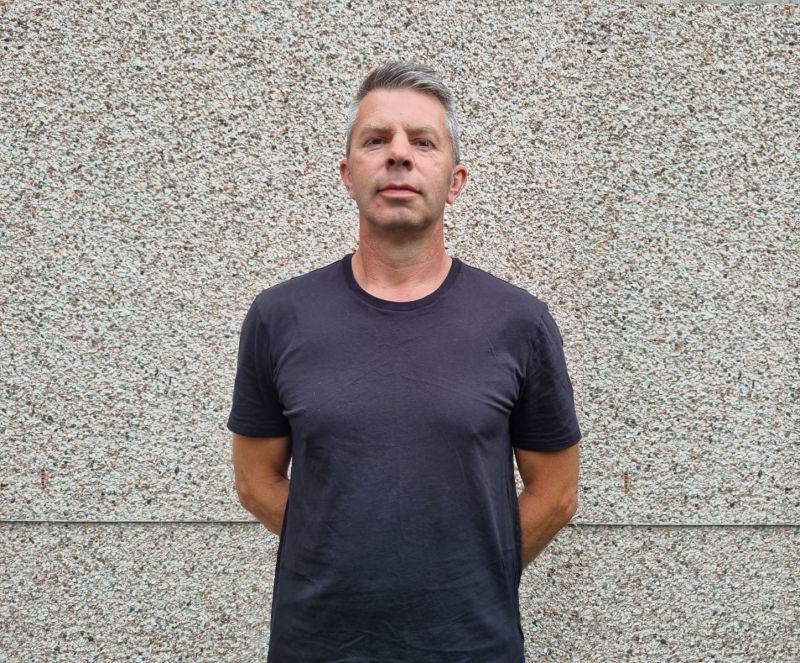
David Toshack is a member of the Free Speech Union who was dismissed from his role as a trainee Prisoner Custody Officer in Scotland for calmly expressing his belief that sex is real, binary and immutable, and that people cannot change sex at will.
Please donate to his case.
Over five weeks of training, David was widely praised. His workbook contained repeated positive comments such as “well done”, “good effort” and “no issues”. He participated thoughtfully in training discussions, including those on managing transgender prisoners. David made clear that he would treat all prisoners with respect, use their chosen names, and adopt neutral language where appropriate. However, he explained that he could not, in good conscience, use pronouns that conflicted with biological sex.
This position went unchallenged until the final week of training, when the safeguarding lead asked David to leave a session after he reiterated that he could only use sex-based pronouns. Minutes later, he was taken into a meeting with a senior trainer and HR and dismissed with immediate effect for being “not suitable” due to his “strong beliefs”. The company claimed his refusal to use preferred pronouns was incompatible with “the law”, despite the belief he expressed being protected under the Equality Act 2010.
No attempt was made to accommodate David’s beliefs, even though he offered a respectful compromise through neutral language. He was escorted off the premises the same day. Normal disciplinary procedures were ignored: he received no warning, no written record of the meeting, and no opportunity to be accompanied. After he appealed, the company changed its justification, alleging he had expressed his views aggressively – an accusation contradicted by its own contemporaneous records.
These failings strongly suggest the decision was predetermined, and that the real issue was not David’s conduct or competence, but his gender-critical beliefs.
This is a straightforward matter of justice. David, a former soldier, lost a job he was eager to begin simply for expressing a protected belief politely and without hostility. He is not an activist or provocateur. He did not impose his views or treat anyone disrespectfully. No one should lose their livelihood for holding and expressing lawful beliefs.
With the Free Speech Union’s support, David is now challenging his dismissal. David’s claim relies on the Equality Act provisions on harassment, direct discrimination and indirect discrimination, as well as the Human Rights Act 1998, which says, among other things, that no one can be compelled to express a belief they do not hold. Beyond employment law, this case highlights how public bodies in Scotland continue to enforce self-identification policies that have no basis in law, even after the Supreme Court confirmed that sex under the Equality Act means biological sex. David’s case could set an important precedent against compelled ideological conformity in the workplace.
With your support, David can secure justice. Donations will help cover legal fees through to the final hearing.
Please donate using the link at the top of this page.
Donations to this appeal will be received and administered as part of the Free Speech Union's Legal Defence Fund. The Fund exists solely to support legal advice and litigation on behalf of FSU members in free speech cases and the FSU itself when it brings free speech cases in its own name. Contributions are pooled and applied by the FSU to support current and future cases involving our members' speech rights, including the case featured here. No part of any donation will be used for the Free Speech Union's general operating expenses or staff costs.
Membership funds all our legal work — including cases like this one. Join 49,000 people standing up for free speech.
Join from £29.99/year