All-Party Parliamentary Group on Freedom of Speech Roundtable on Jury Trial Reforms
30 March 2026
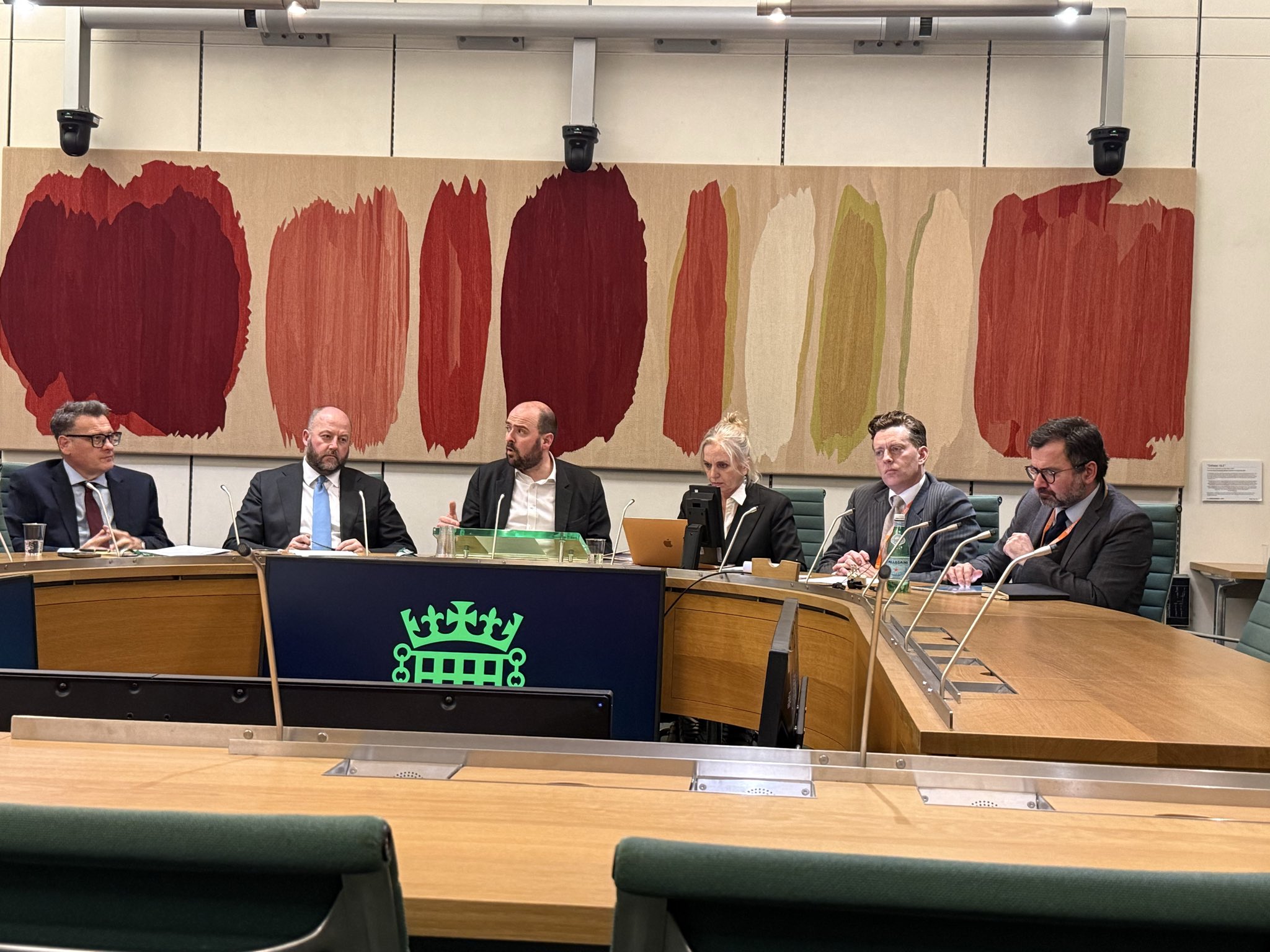
Last Monday, the All-Party Parliamentary Group (APPG) on Freedom of Speech, chaired by the Shadow Transport Secretary Richard Holden MP, hosted an important roundtable discussion in Parliament on the Government's plans to restrict our fundamental right to trial by jury.
The panel brought together a range of cross-party voices, alongside leading figures from the legal profession, all of whom set out their opposition to the proposals spearheaded by the Deputy Prime Minister and Justice Secretary, David Lammy. Speakers included Karl Turner MP, who is leading the Labour backbench rebellion against the reforms; Shadow Justice Secretary Nick Timothy MP; Chair of the Bar Council of England and Wales, Kirsty Brimelow KC; criminal barrister Adam King; and the Free Speech Union's Chief Legal Counsel, Dr Bryn Harris.
Under the proposed reforms, defendants facing a maximum sentence of less than three years' imprisonment will no longer have the right to elect for trial by jury. Instead, such cases will be heard by a lone judge.
The Free Speech Union has campaigned vigorously against these reforms since they were announced in December. The right to trial by jury is a cornerstone of the criminal justice system and a fundamental liberty, codified in Clause 39 of Magna Carta. It also serves as a vital safeguard of English liberty at a time when free speech is increasingly under attack by a militant cancel-culture mob and an authoritarian government.
Karl Turner MP, who has represented Hull East since 2010 and previously served as Shadow Attorney General and Shadow Solicitor General, has led opposition to the plans from the Labour backbenches — an often difficult and isolated position to find oneself in. During the roundtable, he acknowledged the personal challenge of rebelling against his party for the first time in 16 years, but emphasised the importance of doing so, describing the proposals as "unfair, unjust, unpopular, unnecessary and undemocratic".
He also noted that Labour did not include these reforms in its manifesto at the last general election, and therefore lacks a mandate to pursue them. In his remarks, Turner expressed disappointment that the Prime Minister — whom he described as a friend — was advancing such a policy. He pointed to a report written by the Prime Minister in 1992, which concluded that the removal of jury trials in Northern Ireland's Diplock courts contributed to wrongful convictions.
Turner warned that the egos of ministers — particularly that of the Justice Secretary — have obscured the inherent risks in the proposals. He also spoke candidly about the pressure he has faced from within his own party, including threats from the Government Whips' Office to withdraw the Labour whip and expel him from the parliamentary party.
Nick Timothy MP, Shadow Secretary of State for Justice, opened his contribution by asking why any government would seek to remove the right to trial by jury from its citizens. He suggested two possible explanations. The first is what he described as "ideological vandalism", pointing to remarks by the Courts Minister indicating that the Government would have proceeded with restricting jury trials regardless of whether or not there was a crisis in the Crown Court. The second is that the Justice Secretary has been overly influenced by Civil Service proposals and too weak to stand up against them. Timothy also warned that the reforms risk the politicisation of the judiciary.
Kirsty Brimelow KC, the newly appointed Chair of the Bar Council of England and Wales, set out the legal profession's strong opposition to the proposals. She emphasised that the breadth of this opposition is unprecedented, with all four Bars issuing a rare joint statement warning that curtailing jury trials would erode public trust in the criminal justice system.
She cited a recent Institute for Government report which found that the proposed changes would reduce Crown Court sitting time by only around 2 per cent — far short of the 20 per cent claimed by David Lammy. Brimelow argued that more practical and creative solutions are available, including ensuring that existing Crown Court capacity is fully utilised. Between early December 2025 and the end of January 2026, more than 64 Crown courtrooms sat empty on working days.
Her case against the reforms was both principled and pragmatic. Constitutionally, jury trial is a fundamental safeguard embedded since Magna Carta. Practically, the proposals will fail to address the underlying causes of delays in the courts.
Criminal barrister Adam King spoke passionately about the importance of preserving jury trials as a central feature of the justice system — not merely as a matter of tradition, but because they underpin public confidence in the fairness of outcomes. He argued that the reforms form part of a broader erosion of civil liberties in the United Kingdom.
Dr Bryn Harris, Chief Legal Counsel at the Free Speech Union, concluded the discussion by emphasising the value of juries as a check against bias, bringing the common sense of 12 ordinary, random members of the public into the courtroom. Research conducted by the Free Speech Union has shown that defendants charged with speech-related offences are almost twice as likely to be acquitted in jury trials at the Crown Court as in judge-only proceedings in magistrates' courts.
If these reforms are implemented, more people will find themselves behind bars simply for exercising their right to free speech.
Sign our petition calling on the Government to save jury trials.
Concerned about the Government's plan to scrap your right to trial by jury?
The FSU is leading the campaign to save jury trials — a right that protects every citizen against state overreach. Join 45,000 members. From £29.99/year.
Join the FSU Today