Islamophobia definition will cause confusion and lead to self-censorship, says counter-terrorism tsar
17 March 2026
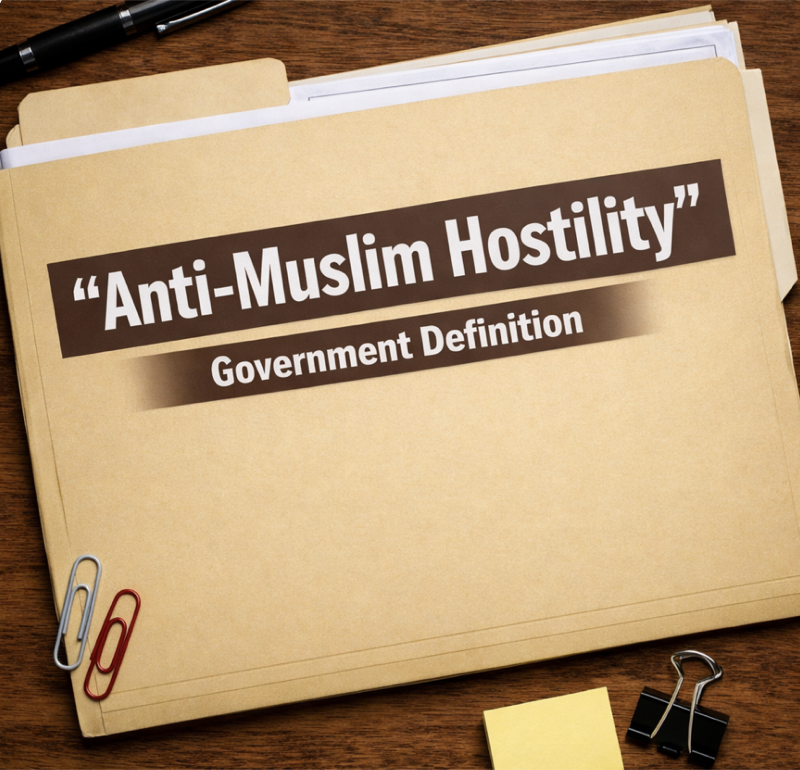
Last Monday, the Communities Secretary, Steve Reed, published the Government's official definition of Islamophobia — now repackaged as “anti-Muslim hostility” — and announced the appointment of a new Islamophobia tsar.
Since the announcement of this de facto Muslim blasphemy law, there have been a number of interventions. The Free Speech Union has campaigned against the definition because of the significant threat it poses to freedom of speech and the right to criticise religion and has launched a legal challenge against the Government.
One of the most striking interventions has come from Jonathan Hall KC, the Government's Independent Reviewer of counter-terrorism legislation. He delivered a scathing assessment, warning that “nothing good will come” of the definition due to the absence of practical guidance.
Hall has warned that the definition risks creating confusion and encouraging self-censorship because ministers have failed to provide clear examples of what constitutes “anti-Muslim hostility”. He said:
“The government has positively encouraged all organisations, public and private, to adopt it. But do local authorities, libraries, universities, charities and museums have the strength and inclination to resist becoming organs of self-censorship?
“It will be hard for local organisations, short-staffed and possibly under pressure from activists and entryists, to keep their focus on intentional hatred, which is or ought to be the essence of the definition.”
The definition effectively introduces a blasphemy law through the back door — 18 years after Parliament voted to abolish such laws. In a free society, no religion should be granted special protection or shielded from legitimate criticism and debate.
In particular, the inclusion of “prejudicial stereotyping” as a form of anti-Muslim hostility may deter people from speaking out on sensitive but important matters of public interest, including the grooming gangs scandal and Islamist extremism.
Steve Reed and his ministers have repeatedly insisted that the definition will not have a chilling effect on free speech. However, critics argue that without clear, real-world examples of what constitutes “anti-Muslim hostility”, the definition is likely to be exploited and weaponised — while victims of genuine anti-Muslim hatred may not receive the protection they need.
Hall reinforced this concern, stating:
“In the real world, people need tangible examples of what is and what is not acceptable. Vague examples of acceptable speech such as ‘raising concerns in the public interest’ do not cut the mustard.”
Fiyaz Mughal, founder of Tell MAMA, a charity that monitors anti-Muslim hate incidents, was also critical of the process, having been excluded from it. He warned:
“You get the worst of both worlds. The danger is the private sector is going to say this is too hot for us to deal with, and you get extreme groups which will utilise it. For example, if I as a Muslim said there was an issue with Pakistani males being involved in grooming gangs, that definition could be used against me.”
A report published earlier this year by the think tank Policy Exchange identified several cases in which comments had previously been labelled as “hostility” towards Muslims. One member of the working group, Baroness Gohir, had previously signed a letter criticising BBC presenter Emma Barnett for a “strikingly hostile” interview with the then Secretary-General of the Muslim Council of Britain — an organisation with which successive governments have declined to engage since 2009 due to concerns about its views.
In a further indication of the potential impact of the definition, just 45 minutes after Steve Reed announced it in the House of Commons, the pro-Gaza independent MP Iqbal Mohamed called for it to be incorporated into the Nolan Principles of Public Life, suggesting MPs and peers could be sanctioned if they fell foul of it.
Worried about laws that could silence legitimate debate?
The FSU challenges vague definitions and bad legislation that chill free speech. Join 49,000 members who speak freely, knowing we have their back. From £29.99/year.
Join the FSU Today