
A year on from the Supreme Court Ruling, gender-critical voices are still being silenced
18 April 2026
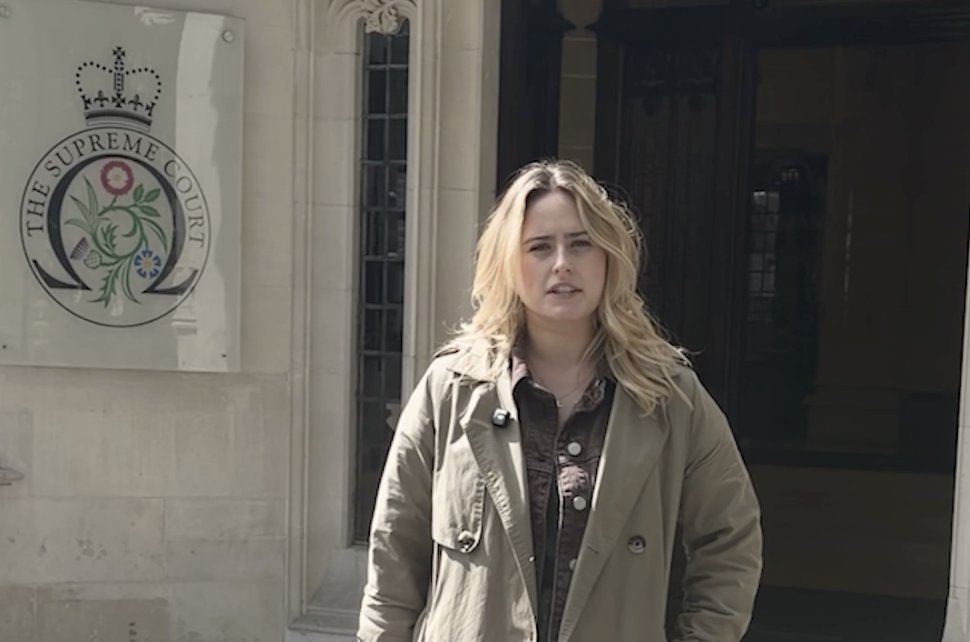
This week marks the anniversary of the Supreme Court ruling which clarified that the terms ‘sex’, ‘woman’ and ‘man’ in the Equality Act 2010 refer to biological sex, biological woman and biological man. It was a historic moment for women and LGB people, affirming that their rights are grounded in biological reality – that the human rights of women and same-sex attracted people are not contingent on documentation such as a Gender Recognition Certificate.
Some have misunderstood the ruling, believing that the Supreme Court changed the law. In fact, as is its role, the Court clarified the intended meaning of the legislation as it has stood since 2010. Critics have characterised the judgment as ‘transphobic’, arguing that it upholds women’s entitlement to single-sex spaces, meaning that men, regardless of how they identify, should not be permitted access to women-only spaces.
In recent years, countless individuals – particularly women – have faced sanctions from workplaces, public bodies, and universities for expressing the view that women are adult human females and are entitled to single-sex spaces. This is despite Maya Forstater’s victory in the Employment Tribunal in 2021, which confirmed that gender-critical beliefs are protected under the Equality Act 2010. Cases involving gender-critical beliefs remain the single largest category handled by the Free Speech Union.
The Supreme Court’s ruling, therefore, is not only a reaffirmation of the rights of women and LGB people, but also a vindication for those who have been penalised for expressing such views. To express gender-critical beliefs is, in essence, to align with the law as it stands.
When questioned about the release of the Equality and Human Rights Commission’s (EHRC’s) guidance on the ruling, the Minister for Women and Equalities, Bridget Phillipson, stated that the Labour government has always supported single-sex spaces. This raises questions about where that support was for women such as Sandie Peggie, Jennifer Melle, and the Darlington nurses, all of whom faced consequences within the NHS for expressing gender-critical beliefs.
Following both Maya Forstater’s legal victory and the Supreme Court’s clarification, there can be no justification for discriminating against individuals on the basis of their gender-critical views. Watch Connie Shaw speak outside the Supreme Court on the first anniversary of the landmark ruling.
Gender-critical at work or university? We’re here.
Cases involving gender-critical beliefs are the FSU’s single largest category. Join 45,000 members from £29.99/year and ensure expert support is there if you need it.
Join the FSU Today