
After the High Court ruling on the University of Sussex vs the Office for Students, free speech on campus will be weaker and litigation is set to rise
11 May 2026
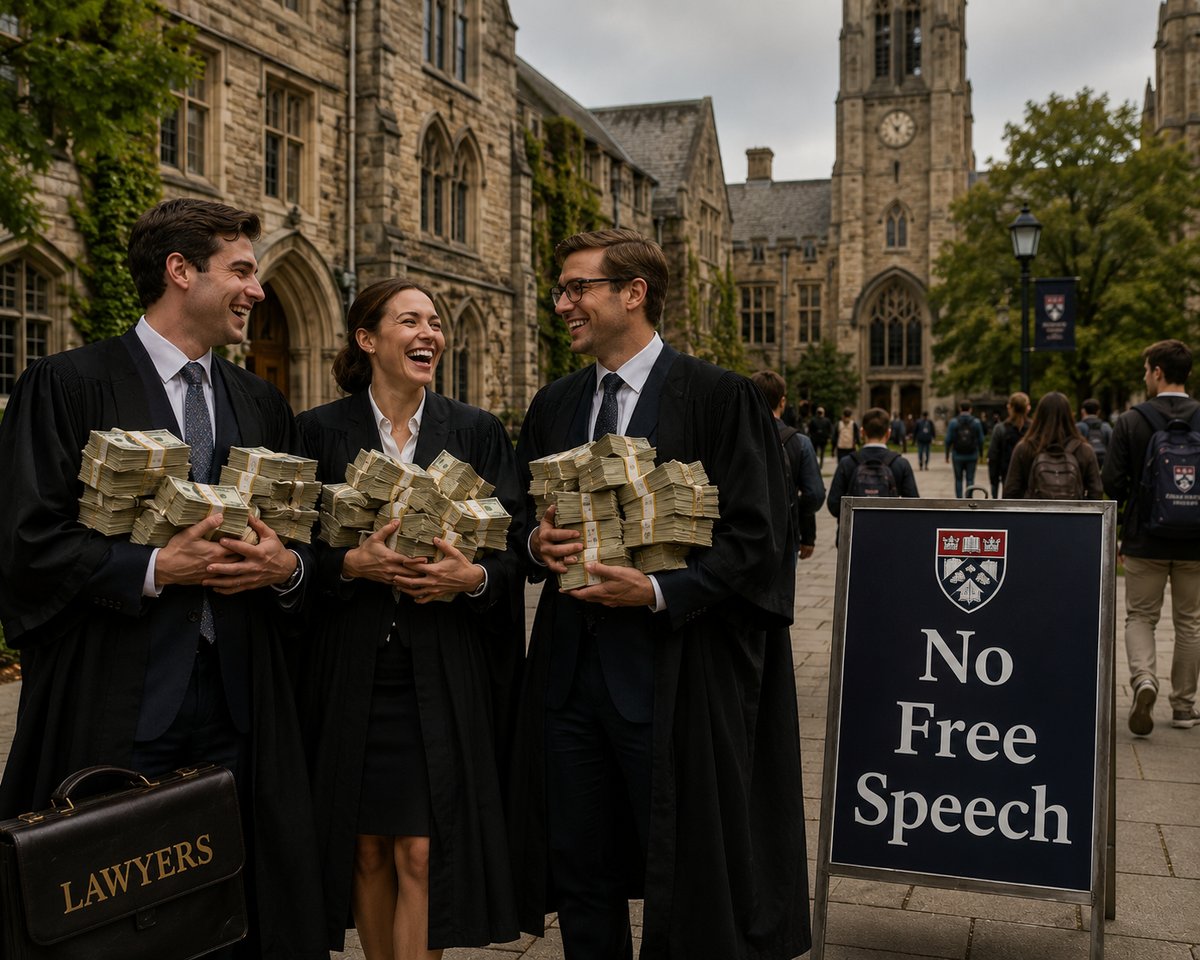
The disappointing High Court ruling in the case of the University of Sussex v the Office for Students (OfS) overturned the record £585,000 fine against the University of Sussex for failing to uphold freedom of speech. The university's treatment of Kathleen Stock had resulted in increasing campus tensions.
In recent years, we have seen the toxic rise of cancel culture on university campuses across the country and a growing intolerance of views that do not conform to prevailing progressive orthodoxies — particularly on issues such as Palestine and trans rights.
We have seen academics and visiting speakers — among them Kathleen Stock and Professor Alice Sullivan — hounded off campus for holding and expressing lawful views. We have also seen students ostracised and forced to self-censor owing to the increasingly militant and vile abuse directed at them by the cancel-culture mob.
At the Free Speech Union, approximately 8% of the 6,000 plus cases we have fought over the last six years have involved universities failing to protect free speech and academic freedom on campus; and, in the absence of a proper complaints scheme, we have had to spend hundreds of thousands of pounds defending our members in court.
For too long, universities have neglected to protect and promote free speech on campus. The Higher Education (Freedom of Speech) Act 2023 (HEFSA) placed legal duties on universities to protect free speech, but without a proper complaints scheme universities have been able to ignore their responsibilities with impunity. One of the first acts of Bridget Phillipson upon taking office as Education Secretary in July 2024 was to pause HEFSA's implementation — until the Free Speech Union secured a partial U-turn from her after threatening a judicial review.
Phillipson has since committed to introducing a complaints scheme for academics, university staff, and visiting speakers, who will be able — should they believe their speech rights have been breached — to complain directly to the OfS free of charge. Universities are also set to face fines of up to £500,000 or 2% of their income if they fail to uphold free speech. Students, however, have not been afforded the same rights and continue to face possible financial ruin should they wish to stand up for their right to free speech.
The High Court's recent ruling sets a poor precedent and is a step backwards for freedom of speech on campus. Some universities have shamelessly labelled the decision a positive day for free speech, but the only winners will be lawyers as litigation is set to increase. The University of Sussex's vice-chancellor and president, Professor Sasha Roseneil, called the ruling a "vindication" of its position and criticised the OfS for taking an "erroneous and absolutist approach to freedom of speech".
Students will lose out as free speech protections are no longer treated seriously. Universities will essentially need only to pay lip service to their free speech obligations under HEFSA.
At the core of this case was the University of Sussex's treatment of academic Kathleen Stock and the university's trans and non-binary inclusion document, which included a requirement to "positively represent trans people" and warned against "transphobia propoganda". The OfS found that the policy risked chilling lawful speech and academic freedom, and subsequently fined Sussex a record £585,000.
The University of Sussex successfully challenged the decision. In her ruling, Mrs Justice Lieven found that the OfS had misunderstood the meaning of "freedom of speech within the law". She also found that the OfS had "misdirected itself" on the question of academic freedom and failed to have proper regard to the university's freedom of speech code of practice. Lieven further held that the policy was not a "governing document" of the university that the regulator could examine. Most damaging of all was her finding that the OfS's ruling "was vitiated by bias" because it had "approached the decision with a closed mind and had therefore unlawfully predetermined the decision".
The judge's restrictive interpretation of what constitutes a governing document could make it harder for the OfS to carry out its regulatory function. The ruling confined the regulator to examining charters, statutes, and ordinances — not equality, diversity, and inclusion policies and other documents that are often the site of free speech breaches. It has been argued that the ruling fails properly to reflect the reality of modern university governance and is ignorant of the free speech crisis gripping university campuses.
Chief Legal Counsel at the Free Speech Union, Dr Bryn Harris, has suggested that Lieven's ruling could "empower" and "embolden" universities to restrict speech on campus.
Concerned about free speech? Join us.
The Free Speech Union defends the right to speak freely, even when speech is unpopular. Membership starts at £29.99 a year and connects you to a community of more than 45,000 members standing up for open debate.
Join the FSU Today