Archbishops of Canterbury and York accused of censorship after they tried to cancel conversion therapy event
16 July 2026
The two most senior bishops have landed themselves in some hot water after it emerged that they threatened to cancel a planned Church of England event on conversion therapy.
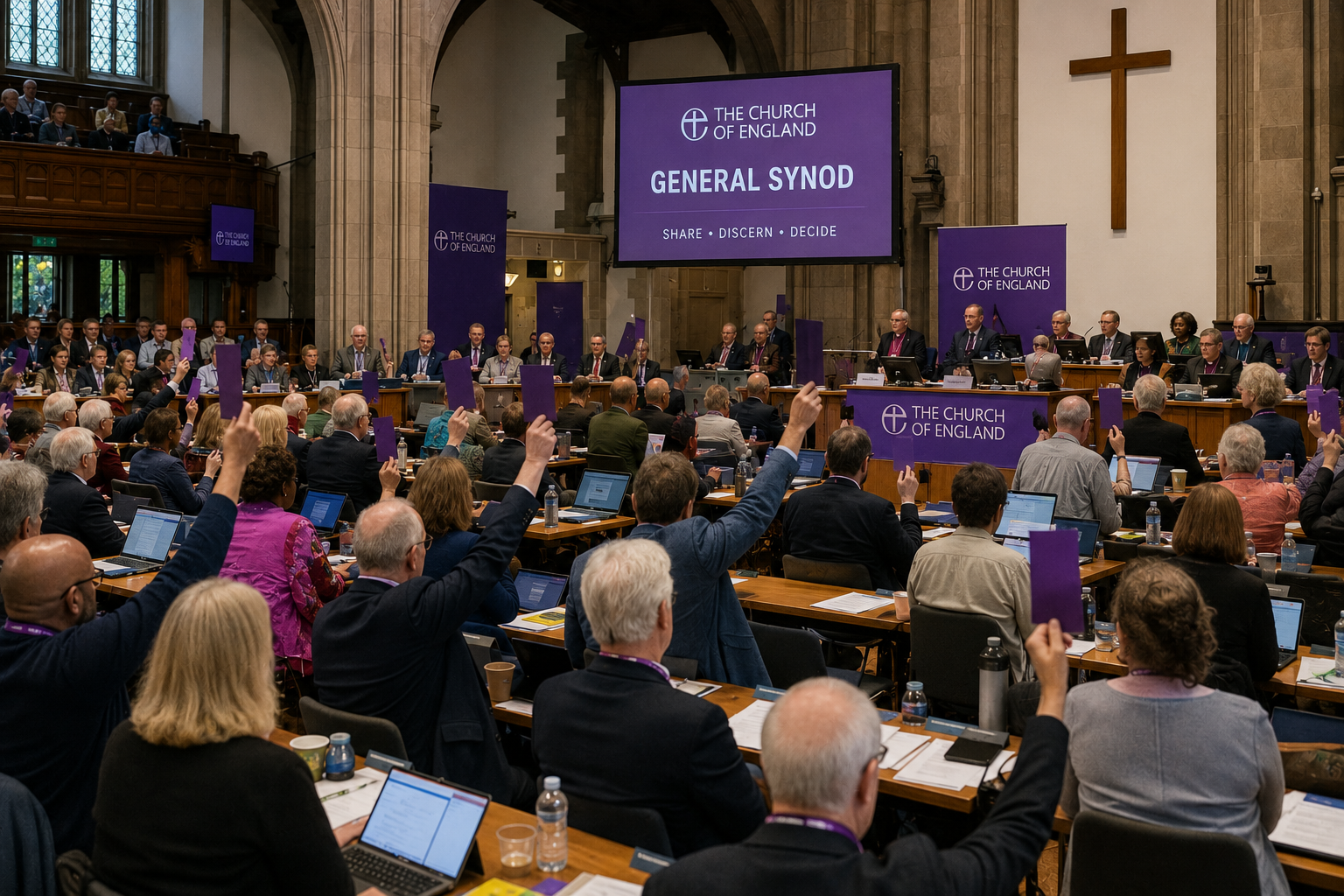
The event was meant to take part on the fringes during the annual convention of the General Synod – the legislative arm of the Church of England – which begins in York on Friday 10th July. This fringe event was focused on discussing the possible implication and consequences of the Government's recently published draft bill to ban conversion therapy practices.
This controversial piece of legislation poses a direct threat to freedom of speech, largely as a result of its poor and broad drafting. Under the new bill, parents could face up to five years behind bars for well-intentioned conversations with gender confused children, and religious leaders could find themselves prosecuted for sharing their faith's teachings on sex, gender and marriage.
The Free Speech Union has set up a petition calling on our next Prime Minister, Andy Burnham, to drop this legislation.
A letter sent last week by Dame Sarah Mullally, the Archbishop of Canterbury, and Stephen Cottrell, the Archbishop of York, raised concerns about the event, warning that it was contrary to the ethos of the Church and may contravene its safeguarding guidance.
The two Church of England elders added that the General Synod voted back in 2017 for a ban on conversion therapy practices and therefore this event would "act as a public statement contrary to that stated position". This is despite the fact that the event has been publicised as a fringe event and is not part of the official agenda of the Synod's convention.
This is a concerning intervention from Church leaders who have now been accused by supporters of "People Change: Sexual Identity Transformation" of censorship.
The event was due to include Matthew Grech, Dr Mike Davidson, chairman of the International Foundation for Therapeutic and Counselling Choice, and Andrea Williams, the chief executive of the Christian Legal Centre.
Ms Williams responded to the Archbishops' letter by saying:
This is an extraordinary and deeply concerning move by the archbishops.
A General Synod fringe event where Christians share testimony, discuss the gospel and consider the implications of proposed legislation should not be treated as a safeguarding threat.
The gospel is about transformation. It is about lives changed by Jesus Christ. That includes men and women who testify that God has changed their identity, desires, behaviour and way of life.
To threaten cancellation of this event after a social media post branding it 'trash' gives the clear impression that intimidation and activist pressure are being allowed to dictate what Christians may hear, say and discuss at General Synod. This amounts to censorship of one of the key gospel issues of our times.
She went on to add:
The archbishops must not allow safeguarding language to be weaponised to shut down orthodox Christian teaching, pastoral care, testimony and debate. Their actions demonstrate how dangerous the Government's proposed 'conversion therapy' ban will be for the Church.
The Church of England's own doctrine has not changed. Those who hold to that doctrine must not be treated as reputational risks or safeguarding threats.
After the intervention sparked a row, the Archbishops of Canterbury and York allowed the event to go ahead. A spokesperson for the General Synod has said:
A General Synod member has applied to host a Synod fringe meeting and related public display on 'sexual identity transformation' at the forthcoming General Synod meeting at the University of York. The organiser has made clear both will challenge the principles of a ban on conversion practices.
Following careful consideration, the Archbishop of Canterbury and the Archbishop of York have informed the Synod member that their fringe meeting, as a private discussion for Synod members and invited guests, may go ahead as planned, but has declined permission for the associated stand and public display.
In 2017, the General Synod voted, by a large majority, in favour of a ban on conversion practices. A publicly visible display would act as a public statement contrary to that stated position and is not appropriate in the circumstances.
This is an alarming intervention and a clear example of safeguarding guidance being weaponised to silence dissent from progressive orthodoxies within the Church of England.
Read more in The Telegraph.
Worried about the conversion therapy ban silencing debate?
We're campaigning against the Government's conversion therapy bill and its threat to open discussion of faith, sex and gender — join the Free Speech Union from £29.99 a year and add your voice to over 50,000 members fighting for free speech, with eligible cases receiving expert legal support and advice.
Join the FSU Today