
Cambridge needs to get a grip on its climate of cancel culture
12 November 2026
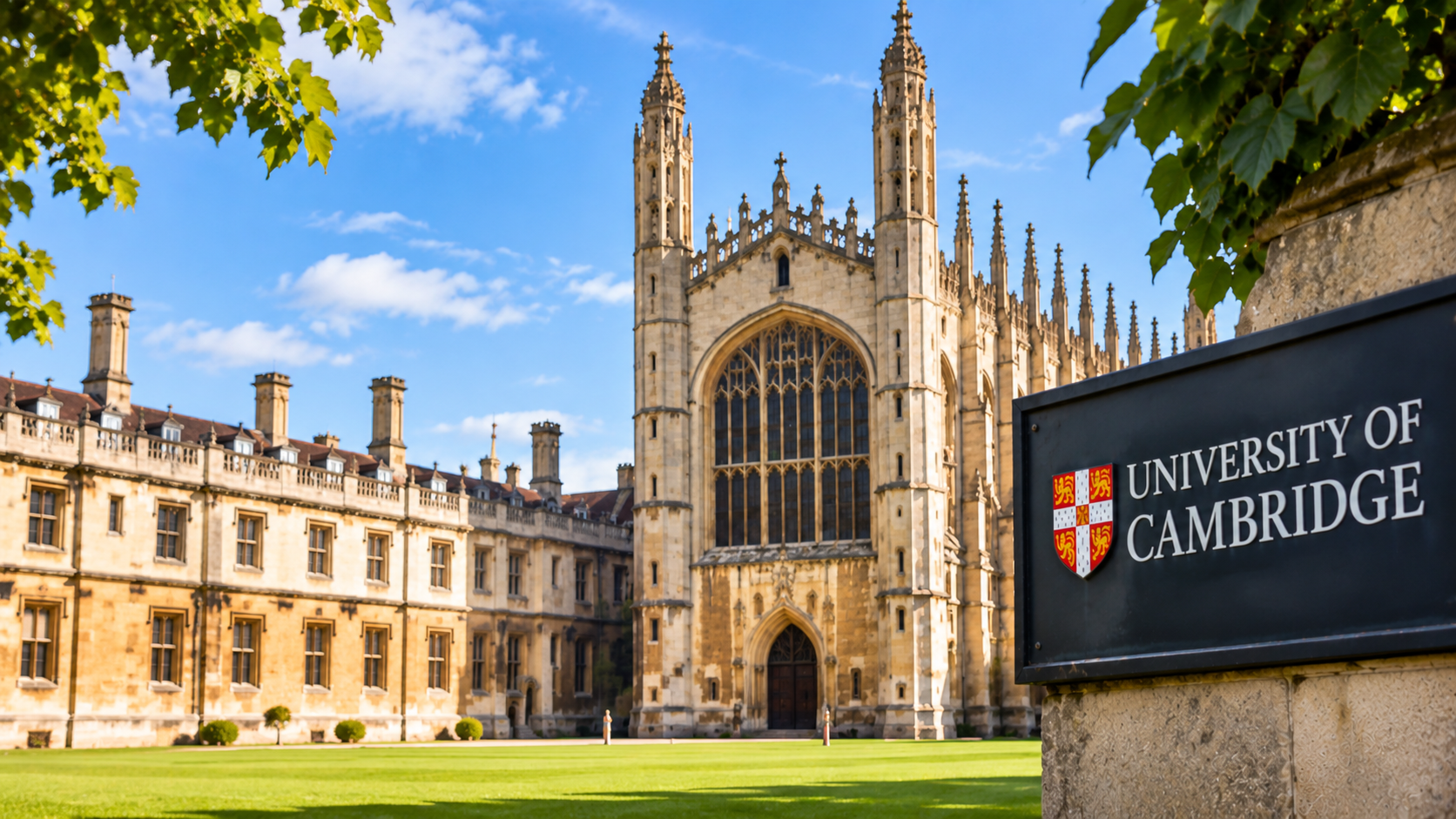
Free speech on campus continues to come under attack, with Cambridge once again showing itself to be a bastion for those seeking to cancel people they disagree with.
The university must hold its nerve over Dr James Orr. Students have repeatedly targeted his lectures in Cambridge, and did so again on Friday 6 November.
Elizabeth Spring, a theology student at Girton College, Cambridge, wrote in The Spectator that "a mob of protesters shouted and banged on the windows of the associate professor of religion's lesson in an apparent effort to dissuade undergraduates from taking his paper. A week earlier, two student activists members of the Fire James Orr Campaign disrupted a lecture he was delivering". She also reported that some students had expressed an alarming desire to see Dr Orr physically attacked.
James Orr stepped down from his role as Reform UK's Head of Policy earlier this year following a Channel 4 undercover investigation into party financing.
Much of the anger behind this campaign is a reaction to the media storm that engulfed Jason Arday, the former Cambridge professor of sociology of education, over the summer. Arday resigned on 5 August following allegations of plagiarism and was found dead nine days later. His death was a tragedy. But James Orr is not responsible for it.
As Elizabeth wrote: "It doesn't matter that there is no substantial link between Orr and Arday, it only matters that Orr is a known conservative."
She added: "One of their incoherent arguments for his guilt is that he is a member of the Free Speech Union".
That membership of an organisation that defends lawful speech should be offered as evidence of guilt says a great deal about the intellectual seriousness of the campaign.
The Faculty of Divinity has since taken additional measures to protect Dr Orr and his students. These included the presence of University Proctors (the officers responsible for student discipline) at both of his Friday lectures, the recording of lectures for students who had told staff they were too frightened to attend, and security checks of student IDs at the door. Security staff told Elizabeth that the ID checks were a response to the fact that many of those campaigning against Dr Orr are not members of the University at all.
Outside, protesters beat drums, waved communist banners, brandished signs bearing James Orr's face, and filmed the building on their phones, accusing the former head of policy at Reform UK of being "bought by Palantir".
That accusation does not survive contact with the facts. According to Elizabeth, the Chair of the Board of Divinity, Richard Rex, told students inside the building that the faculty had never accepted money linked to Peter Thiel or to Palantir, the data-analytics company Thiel co-founded; on 9 November, the faculty formally denied, in an email to staff and students, that any such donation had ever taken place.
Students who dislike Dr Orr's politics are entitled to say so, but not bang on its windows until he cannot be heard. This is a prime example of a heckler's veto.
Nor is this campaign about due process. The University is examining complaints concerning Dr Orr's conduct, and those processes must run their course on the evidence, as they would for any other member of staff. The Fire James Orr Campaign, launched in August with the support of the Cambridge Communist Society, does not wait for findings; its stated aim is that he should stop teaching at Cambridge altogether. A university that allowed a pressure campaign to pre-empt its own procedures would be abandoning both academic freedom and elementary fairness.
The law is not silent on this. Since 1 August 2025, section A1 of the Higher Education and Research Act 2017 (inserted by the Higher Education (Freedom of Speech) Act 2023) has required English universities, and their constituent colleges, to take the steps that are reasonably practicable to secure freedom of speech within the law for staff, students, and visiting speakers. That duty expressly includes academic freedom: the freedom of academic staff, within the law, to question received wisdom and to put forward controversial or unpopular opinions without placing their employment at risk. Since 1 September 2026, staff who believe those rights have been infringed have been able to complain directly to the Office for Students, whose Director of Free Speech and Academic Freedom, Arif Ahmed, is himself a Cambridge philosopher who in 2020 led the successful campaign to stop the University replacing "tolerate" with "respect" in its free speech statement. A lecturer whose teaching is drowned out by drums is precisely the case the duty was written for.
Cambridge has not covered itself in glory in recent years with its approach to free speech. In 2019, the Faculty of Divinity rescinded a visiting fellowship it had offered to Jordan Peterson. In 2023, St John's College demanded that an undergraduate pay the security costs of a film screening she had organised; the Free Speech Union met the bill.
Writing about the level of cancel culture at the university, Elizabeth said: "I wish I could say that political intimidation is unusual at my university, but this instance of campaigning with the intent to silence dissenters from Cambridge's political monoculture is unfortunately normal. Instances abound of events being cancelled, or kept under the radar due to the risk of counter protests".
Members of the Cambridge University Society of Women, supported by the Free Speech Union through the Ian Mactaggart Programme, have faced a relentless campaign of abuse for their lawful gender-critical beliefs (beliefs which, since Forstater v CGD Europe [2021] UKEAT 0105_20_1006, have been recognised as protected philosophical beliefs under the Equality Act 2010). They continue to advertise the locations of their events only on the day itself to avoid confrontation from other students.
Cambridge's response so far (Proctors in the room, recordings for the absent, IDs checked at the door) is welcome, but it is defensive. The University should now go further. It should state publicly and unambiguously that Dr Orr's lectures will continue; it should use its disciplinary procedures against any student who disrupts teaching; and it should make clear that those who are not members of the University have no licence to intimidate those who are. Anything less tells every activist in Cambridge that the way to remove an academic is not to win the argument but to make enough noise.
The Free Speech Union will continue to stand with academics and students targeted for their lawful views, at Cambridge and elsewhere.
Facing a cancel-culture mob at your university?
The FSU backs academics and students facing cancel mobs, from Dr James Orr to the Cambridge University Society of Women. Join 50,000+ members. From £29.99/year.
Join the FSU Today