
Home Secretary calls time on NCHIs, but the battle for common sense policing continues
4 April 2026
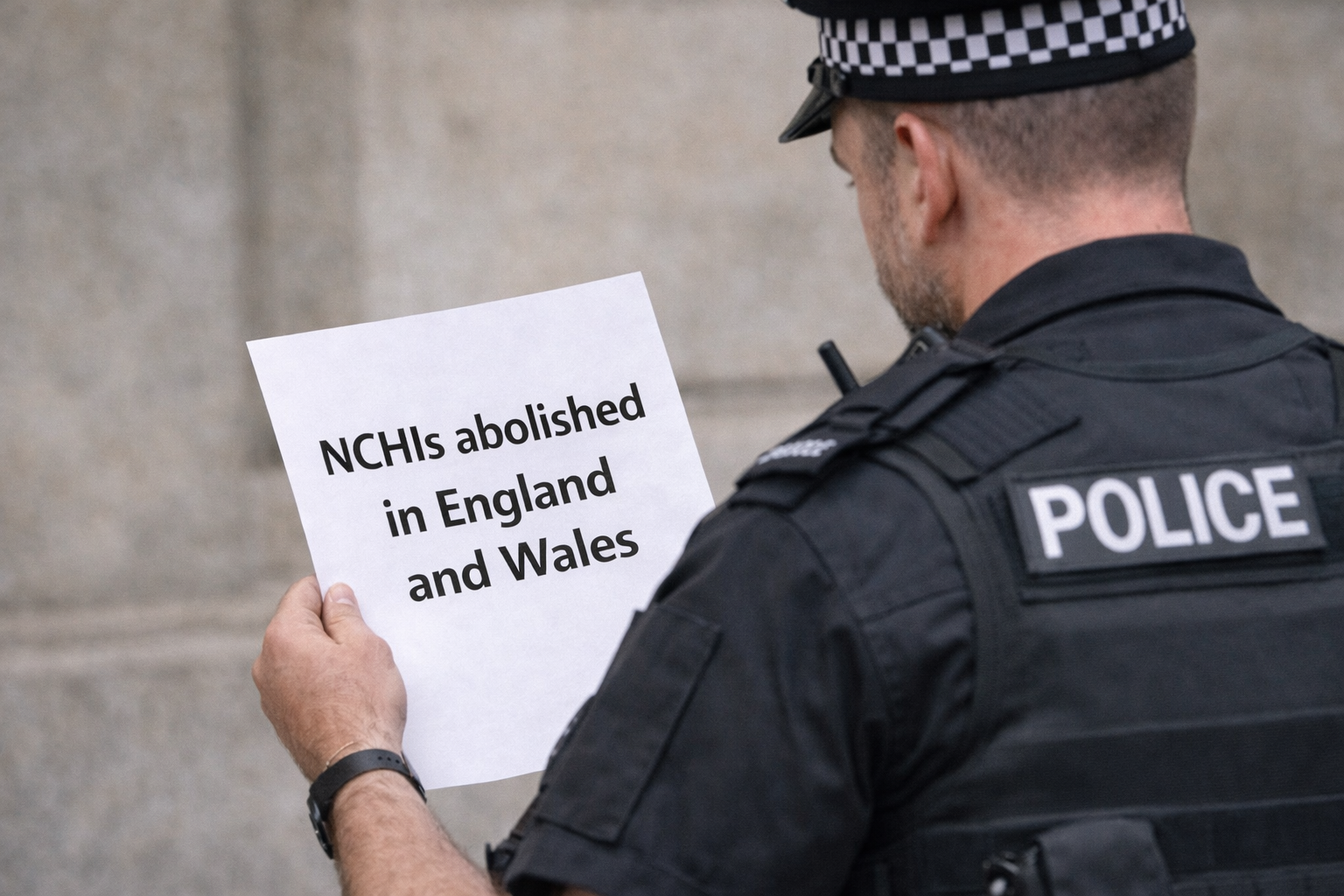
At long last, the Home Secretary has announced that police in England and Wales will no longer investigate or record online spats or hurty words, as we finally wave goodbye to non-crime hate incidents (NCHIs).
Since their introduction in 2014, following recommendations stemming from the Macpherson Report, NCHIs have had a chilling effect on free speech. They have been weaponised and deployed by increasingly militant activists or individuals to silence and target those with whom they disagree.
As crime runs rampant on streets across the country, police officers have fixated on investigating vexatious complaints about social media posts, rather than addressing real-life crime causing genuine harm. NCHIs have been a colossal waste of police time and taxpayers’ money. The Free Speech Union estimates that police forces in England and Wales have recorded over 250,000 NCHIs in the 12-year history of the regime, with more than 60,000 hours a year spent investigating and documenting such incidents in England and Wales, according to Policy Exchange.
Some of the more bizarre examples of NCHIs include two secondary school girls being reported for telling a fellow student she smelled “like fish”, and a man who hummed the Bob the Builder theme tune when encountering his neighbour.
Yet NCHIs are no cause for hilarity — particularly for those they impact. One of the most pernicious aspects of an NCHI is that it can remain on an individual’s record for up to six years and may even appear on enhanced DBS checks. This has the potential to affect employment prospects in roles involving working with children or vulnerable people. Yes, that’s right. You could be prevented from getting a job for committing a “non-crime”.
For the past six years, the Free Speech Union has campaigned vigorously for the abolition of this regime, calling for police to focus on their core responsibilities: solving crimes and catching criminals. The scale of the problem is underscored by the fact that, in 2023, approximately 90 per cent of crimes went unsolved, while 13,800 people were arrested for “offensive” online posts.
It now appears that change is finally underway. Following sustained campaigning by the Free Speech Union, alongside a joint report from the College of Policing and the National Police Chiefs’ Council, NCHIs in their current form will be abolished. The report concluded that NCHIs are “not fit for purpose” and acknowledged their chilling effect on freedom of expression.
Home Secretary Shabana Mahmood confirmed this week that police forces across England and Wales will no longer record or investigate incidents in a manner that threatens lawful free speech or diverts resources from tackling genuine crime. Non-crime incidents will now only be recorded where they are relevant to the police’s core duties of preventing and solving crime.
Mahmood stated: “Under these reforms, forces will no longer be policing perfectly legal tweets. Instead, they will be doing what they do best: patrolling our streets, catching criminals, and keeping communities safe.”
This announcement has been a long time coming. Its urgency was brought into sharp focus last September when Irish comedian Graham Linehan was arrested by five armed officers in connection with three gender-critical posts. The incident attracted widespread attention, including from senior figures in the Trump administration, who have become increasingly frustrated and vocal over the UK Government’s blatant disregard for free speech.
When the Crown Prosecution Service later confirmed that no further action would be taken against Mr Linehan, the Metropolitan Police said they would stop investigating NCHIs, although they would continue to record them. Now, no police force in England and Wales will investigate or record NCHIs.
Under the new framework, the threshold for recording what will now be called anti-social behaviour incidents with a prejudice qualifier has been raised. However, they will not be treated as crimes, nor will criminal terminology such as “offender” or “victim” be used.
While this represents a positive step, there remains a risk that the new system could replicate some of the issues associated with NCHIs, such as disclosure of some ASBIs in enhanced DBS checks.
Under the new regime, personal data will only be recorded where there is a “genuine policing purpose” and a “real risk of harm”, in line with guidance developed by the College of Policing and approved by the National Police Chiefs’ Council. But there is a lack of clarity regarding the tens of thousands of historic NCHIs that remain on individual records. An amendment by Lord Young, Director of the Free Speech Union, which was carried in the Lords, would clarify some of these issues.
Although the abolition of this Orwellian regime should ideally be put on a statutory footing — something Lord Young’s amendment achieved — it would be churlish not to recognise this as a genuinely positive development. However, with police forces in Scotland and Northern Ireland apparently intent on retaining NCHIs, the broader battle against overzealous policing is far from over.
We campaigned for six years to abolish NCHIs — and we won.
Join 45,000 members standing up for free speech in Britain. Your membership funds campaigns like this one. From £29.99/year.
Join the FSU Today