In a desperate bid to avoid scrutiny, Professor Arday tried to use the police to silence a journalist and an academic
10 August 2026
The story of Professor Jason Arday is truly baffling.
Jason Arday — Cambridge's youngest ever black professor — has pitched himself as an educational miracle, but it appears that there are considerable inconsistencies in his illustrious academic, charitable, and sporting record.
While one might be forgiven for focusing on, and even chuckling at, the extent of the alleged distortions and exaggerated claims surrounding his academic and charitable record, there is something more troubling about this story.
Arday has claimed that he did not speak before his twelfth birthday, could not read or write until he was eighteen, completed thirty marathons in thirty days, and appeared on a TV show that aired twenty years before he was born.
It has now emerged that, in a desperate bid to silence those who were scrutinising his record and asking legitimate questions, Jason Arday reported a fellow academic and a journalist to the police. He also contacted the notoriously aggressive law firm Carter-Ruck to arm him for the fight.
Jack Grove of Times Higher Education put a number of legitimate questions to Professor Arday in an email while investigating potential plagiarism in his PhD thesis. In response, Arday reported Grove to the Metropolitan Police, accusing him of harassment.
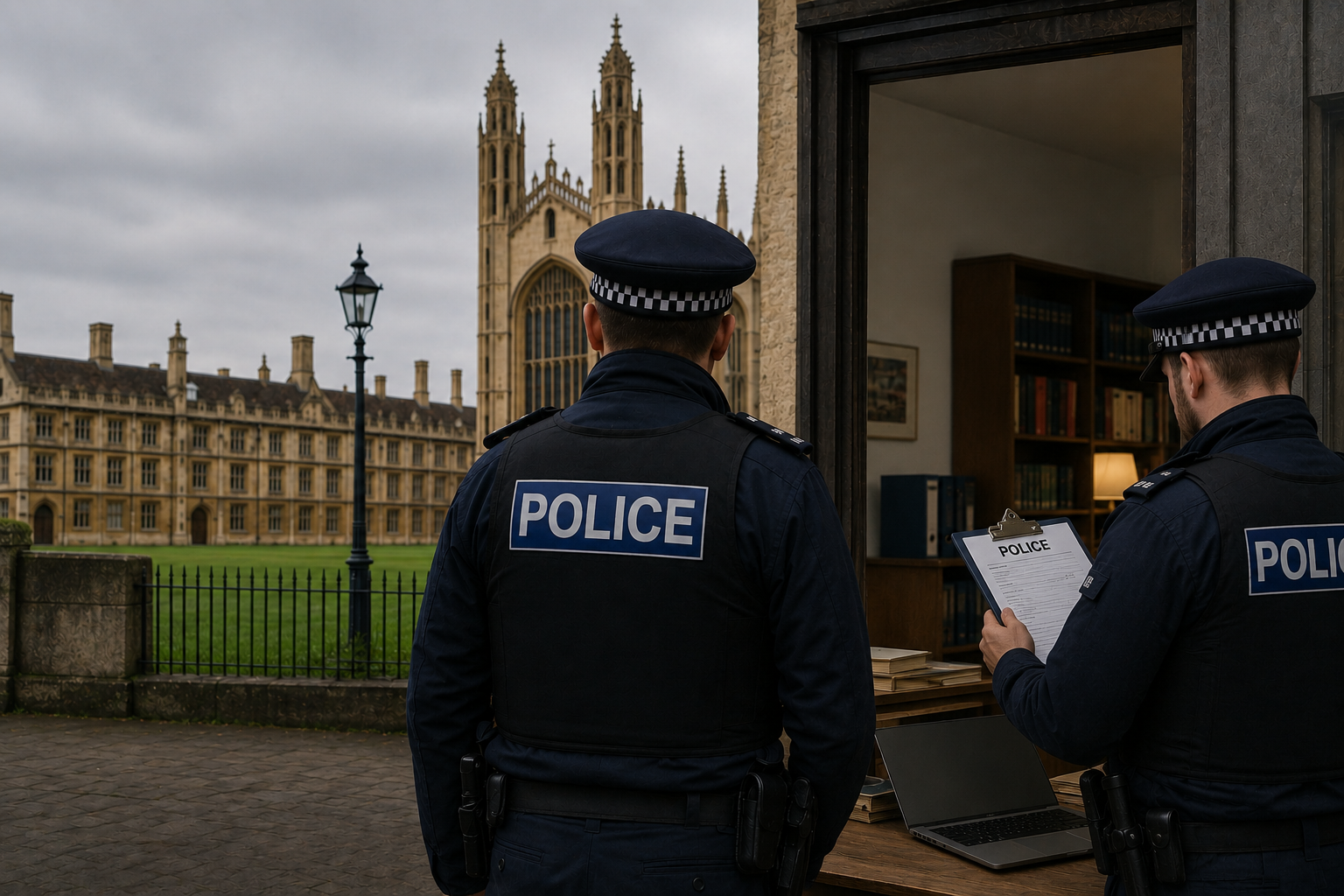
Rather than ignore this blatant attempt to silence the free press, the Metropolitan Police spent four months investigating Times Higher Education reporter Jack Grove after he was accused of harassment for emailing Professor Arday a series of legitimate questions about his academic record.
Speaking to The Telegraph, Mr Grove said: "I was told a complaint had been made against me and investigated, but the force was not taking it forward. The officer told me that I shouldn't contact Professor Arday again because his mental health had been affected by my actions.
"I asked him what I had done, and he said there had been online posts about Professor Arday. I said I'd never posted anything about him and asked him if he realised he was speaking to a journalist investigating a story. He didn't really respond but repeated his request that I not contact Professor Arday again, citing his mental health.
"I was just doing my job. Journalists should be free to ask questions of anyone, even star professors. It's very rare for academics to refuse to speak to the press — that prompted me to look into this matter further, and I was astonished by what I found."
Jason Arday also instructed the law firm Carter-Ruck, which suggested in a letter to THE that its "apparent attack" on him "may be… racially motivated".
But this is not an isolated case. When fellow academic Dr David Harris, Professor Emeritus at Plymouth Marjon University, challenged Professor Arday over apparent inconsistencies, errors, and possible plagiarism in his work, Arday did not react well. Instead, he reported Dr Harris to the Metropolitan Police. The Met then passed the complaint on to Devon and Cornwall Police, who quite rightly decided not to investigate. This raises a serious question about the Metropolitan Police, who then spent four months investigating a journalist for simply doing his job.
Writing for the Committee for Academic Freedom (CAF), Frederick Attenborough, formerly of this parish, said: "In taking no further action, Devon and Cornwall Police got the decision right. But as the recent cases of Maxie Allen, Darren Brady, Julian Foulkes, Kellie-Jay Keen, Markus Meechan, Jennifer Swayne and David Wootton demonstrate, police forces have not always covered themselves in glory when deciding whether lawful but contentious expression warrants arrest or investigation under broadly framed communication offences."
In his piece, Frederick also raised the alarm over the consequences of Professor Arday's actions, stating that "Academics will be less likely to engage in robust debate and scholarly inquiry — testing published claims, identifying apparent errors or raising concerns about research integrity — if doing so exposes them to allegations of criminal wrongdoing and the prospect of a prolonged police investigation. That is why any tendency to reach for the criminal law when confronted with academic criticism must be checked before it becomes, if not normalised, then at least an attractive means of avoiding difficult but legitimate questions."
The Free Speech Union is alarmed about the actions of Professor Arday, who tried to direct the police to silence those who were legitimately scrutinising his record. General Secretary of the Free Speech Union, Lord Young of Acton, has written to Sir Mark Rowley, the Commissioner of the Metropolitan Police, seeking an urgent explanation as to why the Met investigated Mr Grove at all.
In his letter, Lord Young wrote: "Telling a journalist to stop making lawful inquiries of a public figure under investigation for potential professional misconduct is not safeguarding — it is press censorship, delivered over the telephone by an officer who appears not to have realised he was speaking to a journalist doing his job until Mr Grove told him so."
During an interview on LBC, Sir Mark Rowley admitted that the Metropolitan Police had "dropped the ball" and should not have investigated Mr Grove.
Sir Mark said: "We dropped the ball on that one — let's not beat around the bush. A report came in, I think it was of harassment or some crime like that. It should have been screened out earlier on as not requiring investigation.
"In hindsight, we should not have done that. Big organisation, we'll make the odd mistake. We shouldn't have made that call to him and said that."
This is quite frankly not good enough. How many times can the Met Police drop the ball, and when will its chief take responsibility? The country's largest force has consistently failed to recognise the importance of free speech and has failed to learn lessons.
In September last year, five armed police officers arrested Graham Linehan when he landed at Heathrow airport for three gender-critical posts on X.
Jason Arday reached for the police when he realised people were on to him. Powerful figures should not have the ability to direct the police to silence those speaking the truth or legitimately scrutinising them. The right to free speech, academic freedom and free speech are fundamental to our society. This is a story that should concern us all.
Read Jack Grove's piece in The Times and Lord Young of Acton's letter to Sir Mark Rowley here.
Reported to police for asking legitimate questions?
The FSU is demanding answers after the Met investigated a journalist for doing his job. Join 49,000 members. From £29.99/year.
Join the FSU Today