Lord Young's speech in Croatia: Does Britain have a free speech crisis?
28 September 2026
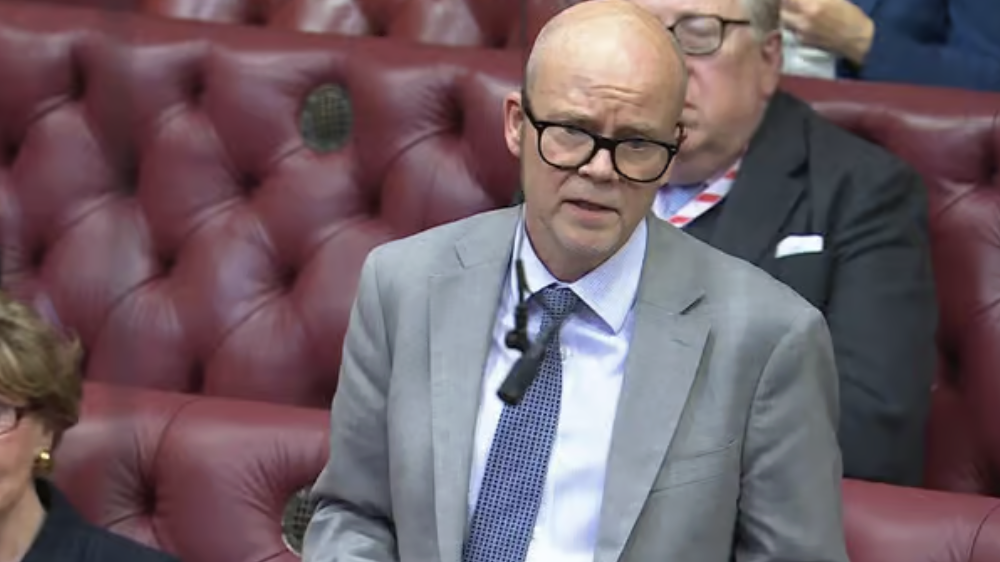
An edited version of General Secretary of the Free Speech Union's speech in Dubrovnik, Croatia on Friday 15th September 2026.
When Keir Starmer visited the White House in February 2025, J.D. Vance used the occasion to raise what he called “infringements on free speech” in Britain. Our then Prime Minister, sitting a few feet away in the Oval Office, was having none of it. “We’ve had free speech for a very, very long time in the United Kingdom,” he said, “and it will last for a very, very long time.” He added that he was “very proud of our history there”.
Was Sir Keir right to dismiss those concerns? I want to answer that question not with anecdotes, of which I have a great many, but with numbers.
Arrests, charges and convictions
Let’s start with a new report from Big Brother Watch, entitled Britain’s Free Speech Problem. Its headline finding is that between January 1st 2021 and December 31st 2025, 62,199 people were arrested in the UK on suspicion of committing just three communications offences. These are section 127 of the Communications Act 2003, which criminalises sending a “grossly offensive” message over a public electronic network; section 1 of the Malicious Communications Act 1988; and section 179 of the Online Safety Act 2023, the new “false communications” offence.
That’s a shocking figure, but it’s an underestimate. Several police forces didn’t respond to Big Brother Watch’s Freedom of Information requests, including Police Scotland. Big Brother Watch estimates the true figure is 73,023. So on a conservative estimate, the police are arresting an average of 34 people a day for things they’ve said, the vast majority online, and the true figure is closer to 40 a day. Russia, incidentally, is thought to arrest around 400 people a year for similar offences.
Of those 62,199 people, 18,520 were charged and 12,292 were convicted. That’s more than 12,000 people with criminal records for speech offences in five years. And that number is likely to go up if the proposals to curtail the right to trial by jury, first put forward by David Lammy when he was Justice Secretary, become law. Research by the Free Speech Union found that in the year to June 2025, 14% of people tried for speech offences in a magistrates’ court were acquitted, compared with 33% in the Crown Court, where the case was heard by a jury. Twelve ordinary men and women, it turns out, are less likely than a district judge to conclude that an intemperate tweet merits a criminal conviction. Leave the decision to them and more people will be convicted.
Is it getting worse?
But is the number of people being arrested for speech offences actually increasing? Yes, it is, as a similar piece of research by the Times established last year. It FoI’d every police force in England and Wales and asked how many arrests they’d made relating to just two of those three offences: section 127 of the Communications Act and section 1 of the Malicious Communications Act. Like Big Brother Watch’s data, the Times‘s is incomplete. Only 37 forces responded. But the trend is unmistakable:
Between 2019 and 2023, the number of arrests rose by 58%, and since 2017 it has more than doubled. The 2023 figure works out at an average of 33 arrests a day.
Non-Crime Hate Incidents
You might think that if most people arrested for these offences aren’t convicted, and the proportion charged in the Times data is lower than in Big Brother Watch’s, then no great harm is done. Not so. Even when no charge follows, the complaint that triggered the arrest may be recorded as a non-crime hate incident (NCHI). (Yes, that can still happen in spite of the recommendation by the College of Policing and National Police Chiefs’ Council that NCHIs should be phased out.) NCHIs can show up on an enhanced criminal records check and prevent you getting a job as a teacher or a carer.
How many of these non-crimes are there? In 2020, the Telegraph FoI’d police forces in England and Wales and discovered that around 120,000 had been recorded between 2014 and 2019. That’s more than 65 a day.
Priorities
There can be little doubt that the police are prioritising the investigation of speech offences over other crimes. Consider the proportion of offences that resulted in someone being charged in the year ending March 2026. For rape, it was 3.4%. For burglary, 5%. For vehicle crime, 2.8%.
The Telegraph found that in 48.2% of neighbourhoods in England and Wales, not a single burglary was solved in a three-year period. Rick Muir of the Police Foundation told the paper that in large parts of the country, burglary had effectively been decriminalised.
So if you come home to find your front door kicked in and your laptop gone, my advice is not to bother reporting it. Instead, spray paint “Transwomen aren’t women” on the door and report the burglary as a ‘hate crime’. You’ll have six armed police officers on your doorstep in 10 minutes.
The Online Safety Act
That brings me to the third offence in Big Brother Watch’s data, section 179 of the Online Safety Act, and to the Act more broadly.
The Online Safety Act (OSA) empowered Ofcom to fine social media companies if they fail to remove illegal content – or, if the content is accessible to children, ‘legal but harmful’ content – and the fines are so eye watering, the threat will inevitably lead to over-removal, including the removal of perfectly lawful posts that are only accessible to adults. Ofcom can fine malefactors up to £18 million or 10% of their annual global turnover, whichever is greater. In Meta’s case, global turnover was $200.97 billion in 2025, so a 10% fine would come to $20.1 billion, or about £14.9 billion. And Ofcom would be entitled to use Meta’s revenue as the benchmark, because Facebook isn’t a separate company. Faced with that sort of downside, what sensible compliance officer isn’t going to err on the side of caution?
The Act is worse in this respect than its European cousin, the Digital Services Act. The DSA requires platforms to take down unlawful content once it has been flagged to them by regulators. The OSA requires social media companies to proactively remove content that is likely to be unlawful, before anyone has flagged anything.
We don’t yet know how much over-removal is taking place, because UK service providers aren’t due to disclose that data until the middle of next year. But to give you a sense of the scale of what’s coming, consider Reddit. In 2019, Reddit’s staff removed 222,000 items for policy breaches and banned 21,900 forums. Reddit’s unpaid army of volunteer moderators – digital curtain-twitchers – removed a staggering 84.1 million items. Those are global figures, not UK ones, but they tell you what content moderation on an industrial scale looks like.
What sort of content is being removed? If you think it’s ‘just’ hate speech, that isn’t much comfort. Who decides what is and isn’t hate speech? Are we happy to let Meta, X and Google make that call? What about Ofcom? To give you an idea of what gets flagged as ‘hate speech’, in April 2020 change.org took down a petition by Kellie-Jay Keen urging the Oxford English Dictionary not to change its definition of woman from “adult human female”, following demands for it to be replaced by something more “trans inclusive”. The reason given by the platform was that defining a woman as an “adult human female” is “hate speech”.
What about ‘misinformation’ and ‘disinformation’? Surely we can trust the platforms to get that right? On November 19th 2020, the Spectator published an article headlined ‘Landmark Danish Study Shows Face Masks Have No Significant Effect’. Facebook flagged it as “false information”. The authors were Carl Heneghan, Professor of Evidence-Based Medicine at Oxford (CEBM), and Dr Tom Jefferson, a senior research fellow at the CEBM and lead author of the Cochrane review ‘Physical Interventions to Interrupt or Reduce the Spread of Respiratory Viruses’. It’s a safe bet that Carl and Tom knew more about the efficacy of face masks and the robustness of the Danish study than the humanities graduate Facebook had employed to fact-check them.
Age-gating
Where content isn’t removed or flagged, it can now be age-gated. Since July 2025, platforms have been obliged under the OSA to age-gate content that is ‘legal but harmful’ to children, so it became inaccessible to users unless they could prove they were 18 or over. Among the things placed behind this gate in the first few weeks were Goya’s painting Saturn Devouring His Son, Katie Lam’s speech in the House of Commons about the grooming gangs, and a Spiked video about online censorship.
In addition, the Government has already amended the OSA to allow it to bring forward regulations restricting under-16s’ access to social media.
Both measures should alarm anyone who cares about democracy because the Representation of the People Bill, currently in the House of Lords, will extend the franchise to 16 year-olds. How are 16 year-olds supposed to make informed decisions at the ballot box if they can’t access social media until their 16th birthday, or watch speeches made in the House of Commons until they’re 18, when platforms like TikTok are now their main source of news?
In theory, these restrictions should be tempered by the duties in sections 17, 18 and 19 of the Act, which oblige platforms to protect content of democratic importance, news publisher content and journalistic content. However, those sections haven’t yet been activated. All the takedown duties are in force; all the keep-up duties are not.
Think Britain's free speech crisis is overstated? Look at the numbers.
The FSU compiles the evidence and fights the cases behind figures like these. Join 50,000+ members. From £29.99/year.
Join the FSU Today