
Reform MS seeks judicial review of Senedd speaking ban
27 November 2026
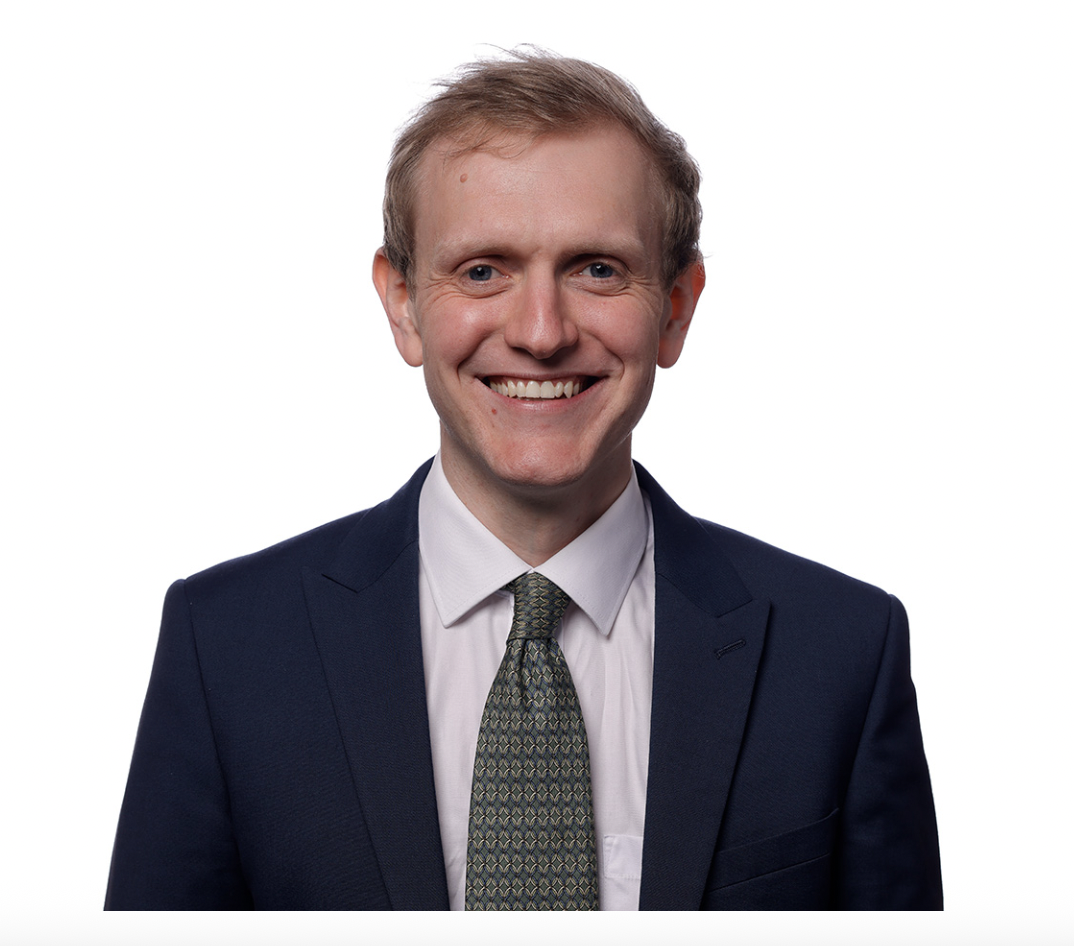
Joe Martin, a Reform UK Member of the Senedd, has been barred from speaking in the Welsh Parliament since asking the Welsh Government for a statement on demographic change driven by mass migration. With the support of the Free Speech Union, he is now asking a judge to lift the ban.
Mr Martin, who represents Caerdydd Penarth, has sent a pre-action protocol letter to the Senedd Commission: the formal first step towards a judicial review in which the High Court could order that he be allowed to speak again.
On 10 November, Mr Martin asked for a statement on "the demographic replacement of white British people taking place in the UK". The Presiding Officer (or Llywydd), Huw Irranca-Davies, a Labour MS whose office requires strict political neutrality, ruled that the remarks were "unnecessarily provocative and deliberately offensive" and "discriminatory", and that the question "detracted from the dignity of the Senedd". He would not, he said, call Mr Martin to speak again until he apologised.
Mr Martin has refused — rightly so. One may agree or disagree with the way the question was framed; settling such disagreements is precisely what a parliament exists to do.
Migration and its long-term effect on the population is a subject on which millions of voters hold strong views, and their representatives are entitled to raise it.
A chamber in which a member may address such a subject – no matter how controversial – only in terms approved by his opponents has ceased to function as a democratic forum. It is the gagging of a member for voicing his constituents' concerns, not his question, that detracts from the dignity of the Senedd.
Mr Martin argues that the ban breaches his right to freedom of expression under Article 10 of the European Convention on Human Rights (ECHR), and that the Presiding Officer acted beyond his remit. Strasbourg has long recognised that, while free expression matters to everyone, it matters especially to an elected representative, who speaks for the electorate and defends its interests (Castells v Spain (1992) 14 EHRR 445). An indefinite exclusion from debate, lifted only on condition of a compelled apology, is a grossly disproportionate sanction for a single question.
General Secretary of the Free Speech Union, Lord Young of Acton, has said:
"We have numerous cases of local politicians reaching out to us because they've been placed under investigation or sanctioned by Town Hall Sir Humphries for speaking out on controversial issues. But this is the most egregious example to date.
"An elected representative should not be gagged by a public official for raising a subject of widespread public concern. The response to someone saying something you profoundly disagree with should be to point out where they're wrong, not to silence them."
A parliament must be a place where the issues affecting the country, however difficult and contentious, can be debated, and no member should be shut out of that debate by his political opponents.
Over the past year, the Free Speech Union has grown increasingly alarmed at the use, and manipulation, of parliamentary protocol and codes of conduct by politicians or unelected officials to silence democratically elected representatives with whom they disagree.
This fight will not be easy, and the issues are complex; but it is vital for democracy and for free speech, and the FSU intends to win it. Watch Lord Young's video and please donate to the FSU's crowdfunder to help end the silencing of elected representatives.
Read more in The Telegraph.
Can a Presiding Officer gag an elected member indefinitely?
The FSU is backing Joe Martin's judicial review against the Senedd's speaking ban — and fighting for other representatives silenced for lawful speech. Join 50,000+ members. From £29.99/year.
Join the FSU Today