Six bills in the King's Speech that threaten free speech
21 May 2026
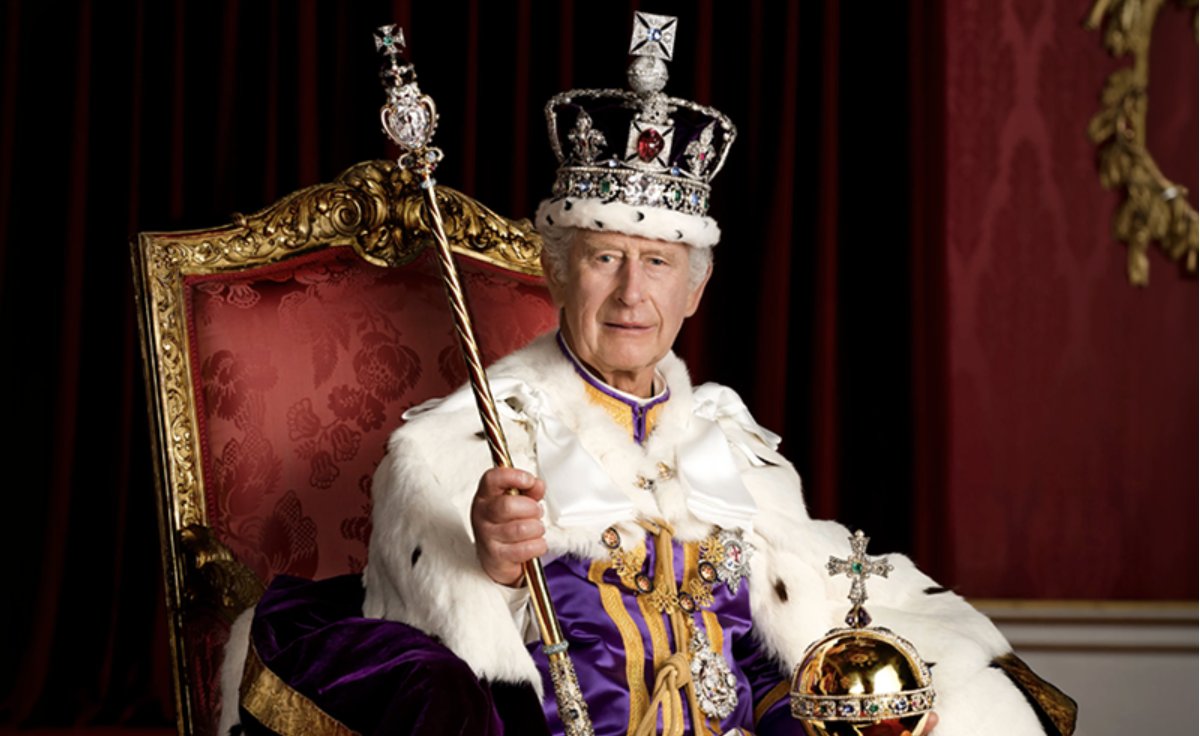
On 13th May, King Charles delivered the King's Speech to both Houses of Parliament, setting out the Government's legislative agenda for the year ahead. Among the 37 bills announced, several caught the close attention of the Free Speech Union's General Secretary, Lord Young, who was listening from his place in the House of Lords.
Below is the FSU's assessment of the bills most likely to pose a threat to free speech and civil liberties in the coming session.
The Draft Conversion Practices Bill
The Government has announced a draft bill to ban what it calls "abusive conversion practices." Forcing gay people to attempt to become straight is already illegal — so the obvious question is: what, precisely, is Labour proposing to prohibit that is not already prohibited?
The Free Speech Union's concern is that this legislation will be used to prevent medical professionals and parents from having good-faith, exploratory conversations with gender-confused children — conversations aimed at helping young people think carefully before embarking on irreversible medical pathways that can cause lasting and serious harm. The word "abusive" is doing an enormous amount of work in the bill's title. The difference between a caring, thoughtful clinical conversation and an "abusive" practice will depend entirely on how the legislation is drafted and how it is enforced. We will be scrutinising both with great care.
The Removal of Peerages Bill
Lord Young has already voiced his concerns about this bill and wrote about it in The Spectator last week. The bill has been prompted by revelations about the nature of Peter Mandelson's relationship with Jeffrey Epstein, and represents an opportunity for the Prime Minister to perform his disapproval of a man he nonetheless appointed as His Majesty's Ambassador to Washington.
The difficulty is a straightforward one: because Mandelson has not been convicted of any criminal offence, the threshold for removing a peerage cannot be conviction. It will inevitably be drafted as some version of "conduct likely to bring the House of Lords into disrepute." At the Free Speech Union, we are all too familiar with how readily that kind of nebulous standard is weaponised. If this bill passes in its current form, the House of Lords risks being inundated with vexatious complaints from political activists seeking to punish their opponents for a single careless remark or a contentious post on social media. Those who express concern about uncontrolled immigration, or hold other views that so-called progressives deem beyond the pale, will face cancellation — while those chanting "globalise the Intifada" on the streets of London will not.
Lord Young spoke in the House of Lords this week to set out his concerns in detail. You can watch his speech on the Free Speech Union's YouTube channel.
The Courts and Tribunals Bill
Of all the bills announced in this King's Speech, this is the most direct and immediate threat to free speech — and to English liberty more broadly. Carried over from last session, the Courts and Tribunals Bill would restrict jury trial to cases carrying a sentence of three years or more, removing the right of defendants across a wide range of offences to be tried by a jury of their peers.
The Government's stated justification is the backlog in the Crown Court. That backlog is real and serious. But the solution it has reached for is the wrong one and disproportionately affects the people least able to defend themselves against an overreaching state. Despite sustained opposition from senior lawyers, senior judges, opposition MPs, Labour backbenchers, and victims of crime, the Government is pressing ahead.
The Institute for Government has shown in a report that the Government’s reforms would only save around 2 per cent of Crown Court time – not the 20 per cent promised by ministers.
For the Free Speech Union, the consequences are stark and specific. Research we have conducted shows that individuals charged with speech-related offences are almost twice as likely to be acquitted before a jury in the Crown Court as before a district judge sitting alone in a magistrates' court. Remove the right to jury trial, and you remove the most important safeguard that ordinary people have against prosecution for the peaceful expression of lawful opinions. More people will be convicted. More people will be imprisoned. Not for violence, not for fraud, not for dishonesty — but for what they have said.
More than 50,000 people have already signed the Free Speech Union's petition calling on the Government to protect the right to trial by jury. If you have not yet signed, please do so here.
The Public Office (Accountability) Bill — the "Hillsborough Law"
This bill would impose a statutory duty of candour on public officials, requiring them not to mislead the public or obstruct official inquiries. The underlying principle is entirely sound, and the Hillsborough families have waited far too long for meaningful accountability from the state.
The concern, as with so many broadly worded statutory duties, is enforcement. Who decides what constitutes misleading the public — and who decides what is simply a view or a conclusion that those in authority find uncomfortable or inconvenient? The distance between the two is not always clear, and a duty of this kind, poorly drafted or aggressively enforced, could have a chilling effect on exactly the kind of frank, candid official speech that healthy public administration requires. The devil will be in the drafting, and the FSU will be watching closely.
The National Security Bill
The Government has committed to a National Security Bill that would, among other things, criminalise the creation and sharing of the most harmful violent material, with the aim of stopping the spread of content that glorifies, trivialises, or normalises serious violence. On its face, that sounds unobjectionable.
The problem — and it is a serious one — is that the bill's details have not yet been published, and the history of broadly worded speech restrictions in this country does not inspire confidence. Consider what that framing could capture in practice. Last September, Graham Linehan was arrested at Heathrow Airport by five armed police officers over posts he had made on X. One of those posts read: "If a trans-identified male is in a female-only space, he is committing a violent, abusive act. Make a scene, call the cops and if all else fails, punch him in the balls." The Crown Prosecution Service subsequently took no further action after significant public outrage. The Metropolitan Police has since issued an unreserved apology. But under legislation that criminalises content "glorifying or normalising violence," would the same post expose its author to prosecution all over again?
We do not yet know the answer, because we do not yet know the bill's terms. What we do know is that the Government has been given ample warning — by the Linehan case and by many others — of what happens when vague speech restrictions collide with an overzealous police force and a complaint-driven arrest culture. The FSU will be pressing for precise, narrow drafting and robust public interest defences before this bill reaches the statute book.
The Digital Access to Services Bill
Finally, there is the Digital Access to Services Bill — the Government's vehicle for introducing a digital identity framework. The bill would establish the legal basis for the state to create, issue, and use digital ID credentials, specifying what information they contain and governing how they are issued, stored, and verified.
The civil liberties implications of a state-administered digital identity system are profound. A government that knows who you are, where you go, and what services you access is a government with an unprecedented capacity to monitor, condition, and — in extremis — restrict participation in public life. The Free Speech Union will have considerably more to say about this bill as its provisions are published in detail.
The Free Speech Union will be engaging with all six of these bills as they progress through Parliament. Watch Lord Young's reaction to the King's Speech on the FSU's YouTube channel.
Help us hold Parliament to account on free speech
The FSU is scrutinising every one of these bills as it moves through Parliament — briefing peers and MPs, publishing analysis, and lobbying for narrow drafting and proper safeguards. Join 45,000 members and back the campaign. From £29.99/year.
Join the FSU Today