Social media ban is just the start, says Lisa Nandy
2 October 2026
A social media ban for under-16s was announced in the dying weeks of Sir Keir Starmer's premiership, and it is about as inconsistent and botched as his time in office.
Just like the Orwellian Online Safety Act, passed by the last Conservative government and implemented under Labour, the social media ban has been framed as a necessary move to protect children from online harms. In reality, it is clear that it will be used as a tool for the Government to clamp down further on free speech and dissent online.
It was confirmed this week that the social media ban for under-16s will come into force in March 2027. The model for the ban has been taken from Australia, where it has been a complete flop. Children there have managed to circumvent the ban by using VPNs (virtual private networks, which disguise a user's location), which led the UK Government briefly to consider restricting access to VPNs in Britain. That was something the then Technology Secretary, Liz Kendall, confirmed on the floor of the House of Commons. The proposal was fortunately put on ice by Kanishka Narayan, now the AI Minister, who nonetheless refused to rule out future restrictions entirely.
If the Government moved to ban VPNs, it would put Britain in the same league as Iran, Iraq, Turkmenistan, and North Korea — obviously not the best company to keep.
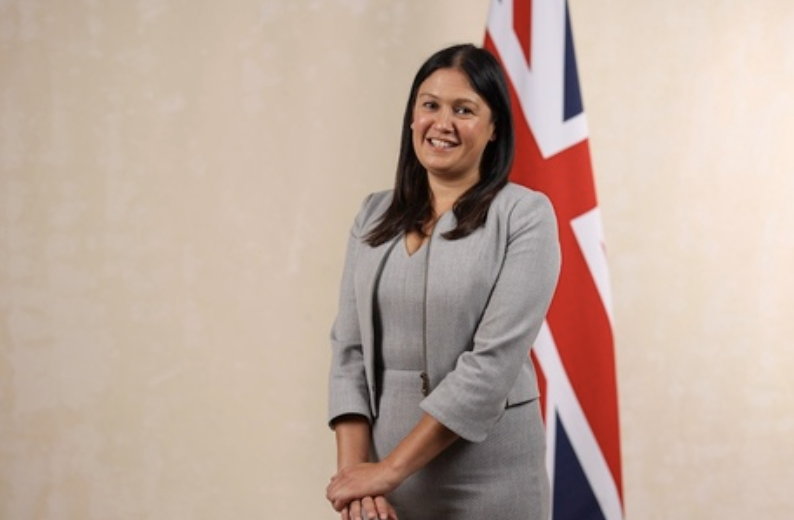
At the Labour Party Conference in Liverpool, Lisa Nandy said that the social media ban is just a "staging post" and vowed to go further, saying: "We shouldn't accept that this is the end."
Ahead of her conference speech, Ms Nandy said that the ban is "a staging post to what must be a very active interventionist state, policing and regulating the online space so that people are safe".
Lisa Nandy has just said the quiet part out loud. The state is already far too interventionist, monitoring and flagging people who criticise the Government and its policies online. Between 2021 and 2025, 62,199 people were arrested for communications offences: for things they had said online or over the phone.
Let us be honest: this push for greater online safety and regulation is no longer solely about protecting children online. It is about the state gaining greater control over what people say online.
Ms Nandy praised former Prime Minister Sir Keir Starmer and former Technology Secretary Liz Kendall for introducing the social media ban earlier this summer. She also acknowledged a "step change" in the Government's approach since Andy Burnham took over in July. These comments have confirmed what we already knew: Andy Burnham's Government will go further with online censorship.
Another major flaw with the ban is that, at the same time as the Government is pushing through reforms in Parliament to lower the voting age to 16, it is also blocking under-16s from social media.
During the Second Reading debate on the Representation of the People Bill in the House of Lords, the General Secretary of the Free Speech Union, Lord Young of Acton, pointed out that if 16-year-olds are to be given the vote, a blanket ban on under-16s accessing social media makes no sense at all, since platforms like TikTok are where 12- to 15-year-olds get their news. How can they be expected to make an informed choice about who to vote for when they reach the age of 16 if they have been banned from those sites?
The Government appears to not even attempt to hide what it is really doing.
Read more in The Guardian.
Worried about the state policing what you say online?
The FSU campaigns against the ever-expanding regulation of online speech, from the Online Safety Act to this ban. Join 50,000+ members. From £29.99/year.
Join the FSU Today