
How the Code of Conduct is being weaponised to silence elected representatives
14 October 2026
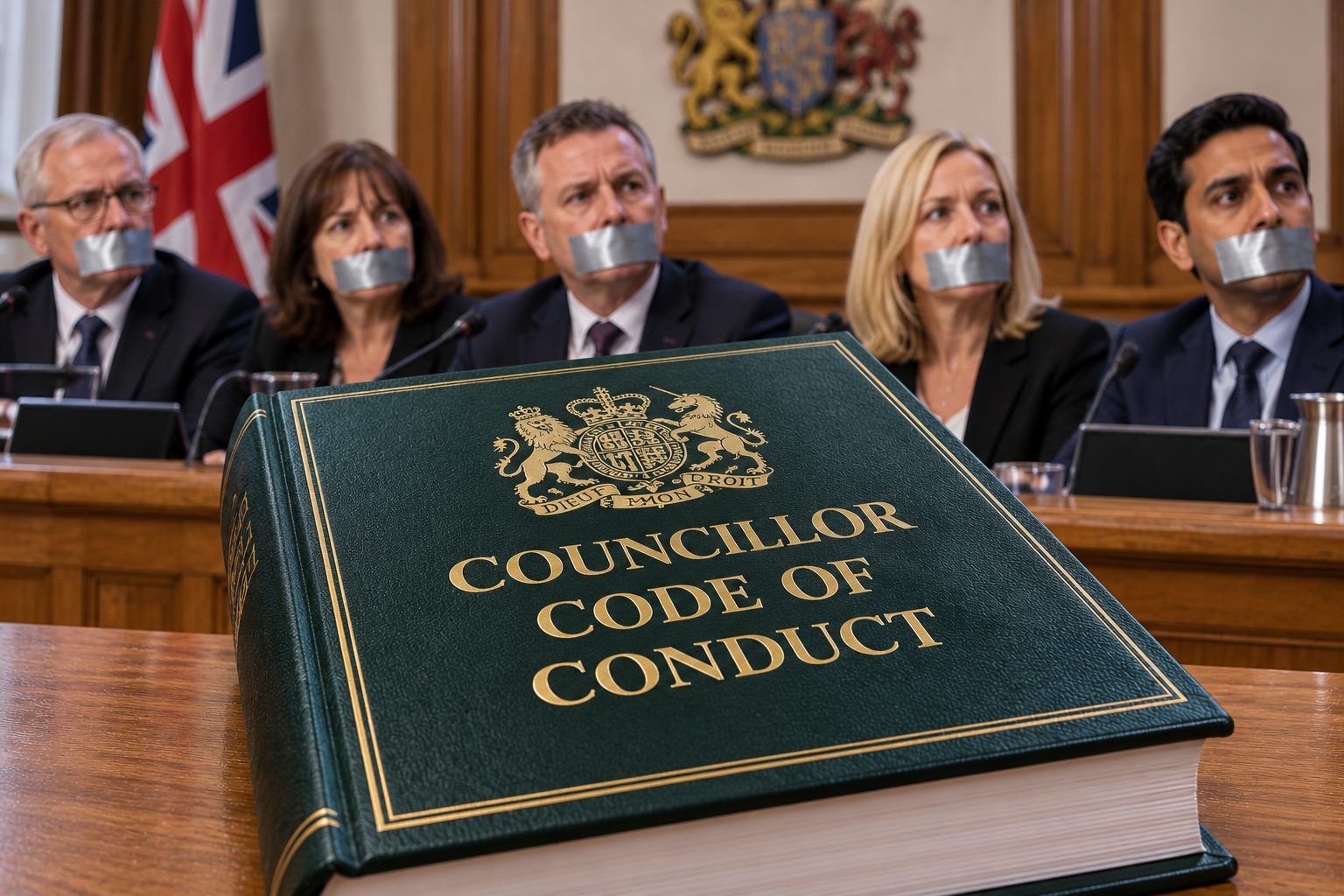
When our local representatives take office, they sign up to a Councillors' Code of Conduct, which sets the standards of behaviour expected of elected members and is aimed at maintaining public confidence in office. Sounds reasonable. These codes are based on the Nolan principles of public life: selflessness, integrity, objectivity, accountability, openness, honesty and leadership. Again, reasonable, but potentially problematic when it comes to free speech. One person's leadership is another's bad behaviour.
A system open to abuse
Anyone may complain that a councillor has breached the code, and there is no cost to doing so. That combination is clearly open to abuse. Complaints arrive in clusters, more often than not coming from left leaning members of the public and/or fellow councillors and aimed at right leaning elected representatives. They target social media posts, emails, comments to the press and even speeches made in the council chamber. Most of the complaints we see at the FSU are raised under the vague allegation of not respecting a person or group, or of bringing their role into disrepute. Our member, Councillor Dulcie Tudor, for example, has received multiple complaints for her lawful gender critical views. Complaints are often raised by rival councillors or their allies, expressing horror at mainstream beliefs about gender, religion, or immigration. Particularly common are complaints about councillors posting political satire online and we have clearly come a long way downhill since the days of Punch cartoons and Spitting Image. Where the aim is to damage an opponent, a finding of breach is a bonus. The headline announcing an investigation is the prize and as they say, the process is the punishment.
The process is the punishment
An investigation can run for months and sometimes longer. The case of Councillor John Edwards, investigated for raising concerns about a hotel for Afghan settlers, despite the information already being in the public domain, has taken over eighteen months to even get to a hearing. Throughout, the councillor lives under a cloud, unable to discuss the matter, uncertain of the outcome, and frequently named in the local press before a single finding has been made. Our local representatives are unpaid, and the process can put a huge strain on their jobs and families. Some even step down rather than see it through. Those who watch learn the lesson quickly. Councillors tell us they now soften their language, avoid controversial subjects and delete posts pre-emptively. That is the chilling effect in practice, and it falls hardest on precisely the dissenting voices local democracy most needs.
A safeguard that too often fails
Every complaint passes first through the council's monitoring officer, who decides, usually after consulting an Independent Person (who often seems anything but), whether it merits formal investigation. That initial assessment is the system's principal safeguard, but too often it fails. Monitoring officers refer complaints that, on any fair reading, concern lawful political expression, apparently on the basis that investigation is the cautious option.
It is not. Councillors' political speech attracts enhanced protection under Article 10 of the ECHR. Cases testing this have confirmed that politicians must tolerate wider limits of criticism than others, and that the protection extends to expression that is immoderate, offensive or shocking. This would include sarcastic and mocking comments about fellow councillors, or making a clear statement on gender ideology, small boats, or Islam. A monitoring officer who refers such speech for investigation without first asking whether a finding of breach could lawfully follow is not exercising caution. He or she is outsourcing a decision that it is their job to make.
Outsourced justice, hidden costs
Formal investigation is then often outsourced. Councils routinely instruct professional investigators and then convene hearing panels, with legal advisers in attendance. We have seen just the investigation report costing around £15,000. Few councils publish these figures, and some do not seem to record them at all. Taxpayers are therefore funding, largely unseen, a system that too often serves as an extension of party politics by other means. If the case progresses, we then have the absurdity of councillors sitting in judgement on their political allies or enemies, which is clearly unreasonable as they will seek to protect 'their' member.
A narrowing window to act
In England, the problems are deepening. In November 2025 the government confirmed plans for a mandatory national code of conduct and increased powers to sanction, including suspension and withdrawal of allowances, a system that is already in place in Scotland, Wales and Northern Ireland. The timeline for this is currently unclear but Labour seems keen to push it through. Under the present regime, a weaponised complaint ends, at worst, in a slap on the wrist, some retraining and removal from some committees. Under the proposed one, it could remove an elected representative from office altogether.
That delay is an opportunity. Monitoring officers should be required to record a reasoned Article 10 assessment before any referral. Complaints that are trivial, vexatious or plainly politically motivated should be rejected at the threshold, and councils should publish what each investigation costs. Standards regimes command public confidence only when they are seen to punish true misconduct in office, not opinion. At present, too many are doing the opposite.
Being investigated for lawful political speech?
The FSU is fighting to protect councillors like Dulcie Tudor from politically motivated complaints that weaponise the code of conduct. Join 49,000 members. From £29.99/year.
Join the FSU Today