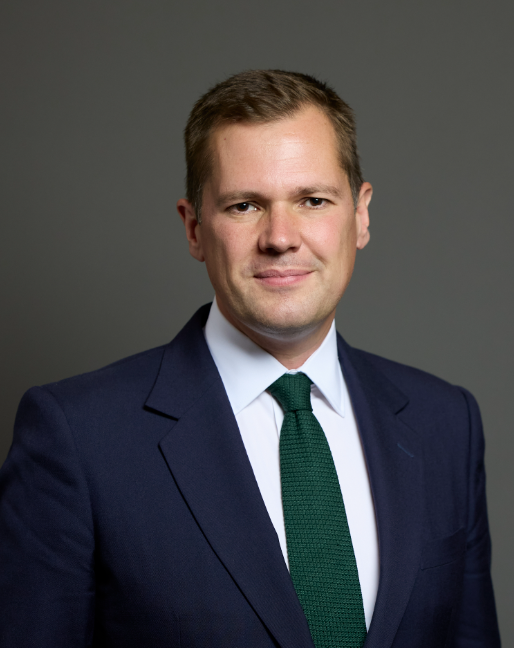
Robert Jenrick reported to police and Prevent over comments on Islam
9 October 2026
There can be little doubt that Britain is witnessing the emergence of what amounts to a de facto Islamic blasphemy law.
The Islamic news website 5Pillars has revealed that Robert Jenrick, Reform UK's Treasury spokesman, has been reported to both the police and Prevent, the Government's counter-extremism programme, over comments he made about Islam.
Mr Jenrick is the latest prominent public figure to find himself the subject of complaints following criticism of Islam. He is also the second high-profile figure in recent weeks to have been referred to the Government's counter-extremism programme over remarks concerning Islam.
Ever since the Government announced its proposed definition of Islamophobia — subsequently repackaged as "anti-Muslim hostility" — the Free Speech Union has warned that it risks having a chilling effect on free speech, particularly the ability of elected politicians and ordinary citizens to criticise Islam, its history and its practices.
Throughout the process, Labour ministers have repeatedly sought to reassure critics that the definition would not restrict legitimate discussion or criticism of Islam. Yet the growing number of complaints against public figures raises serious questions about whether those assurances are being honoured in practice. The Free Speech Union has been proved right time and time again.
According to 5Pillars, Mr Jenrick was reported to the Metropolitan Police and referred to Prevent following his appearance on Dan Wootton Outspoken. The complainant asked the police to consider whether his remarks could constitute stirring up religious hatred under Part 3A of the Public Order Act 1986.
The complainant also asked Prevent to assess whether the framing of Mr Jenrick's remarks fell within its understanding of extreme right-wing ideology.
The Free Speech Union has long warned about the danger of public order legislation being misapplied to legitimate criticism of religion. The case of Hamit Coskun is a particularly troubling example of the difficulties that can arise when religious offence becomes entangled with criminal law.
During the programme, which aired on 6 October, Mr Jenrick said:
Radical Islam is a threat to everything that we hold dear in this country. That it has to be fought and destroyed. It has to be eradicated from our country. And that we can't allow the creeping Islamification of the United Kingdom.
He went on to say:
Wearing the burka, Shari'ah courts, hate preachers. End every one of these as quickly as possible, then maybe we've got a fighting chance of saving our country from going down the same path as France has clearly gone down.
Whatever one thinks of Mr Jenrick's choice of language or the policies he advocates, these are matters of legitimate political debate. Elected representatives must be free to raise concerns about religious practices, political Islam and the influence of religion on British public life without automatically finding themselves the subject of police complaints or counter-extremism referrals.
Criticising Islam is not, in itself, extremism. Nor is expressing concern about Islamist ideology, religious fundamentalism or their implications for a liberal democratic society.
The threat posed by Islamist terrorism is well documented. Figures cited in this debate indicate that, since 2000, Islamist terrorists have killed 98 people in Great Britain, compared with three killed by extreme right-wing terrorists. On those figures, Islamist terrorism accounts for approximately 97 per cent of deaths attributed to those two categories of terrorism.
These figures illustrate the seriousness of the threat posed by Islamist extremism. They do not, of course, justify hostility towards Muslims generally, but they demonstrate why discussion of radical Islam and national security must remain possible in a free society.
The concern is that complaints mechanisms intended to address genuine hatred or extremism are increasingly being used against people expressing controversial political or religious opinions.
The Free Speech Union believes that the Government's "anti-Muslim hostility" definition risks making this problem worse. A definition intended to protect people from hostility must not become a means of shielding religious beliefs, practices or institutions from scrutiny.
Mr Jenrick is far from the only public figure to have faced such complaints. Indeed, I have a particular interest in his case, having previously worked for him.
In recent weeks, comedian John Cleese has also been referred to Prevent over what a complainant described as "incendiary posts about Muslims and Islam" on social media.
The complainant reportedly alleged that the posts were dehumanising, collectively attributed violence and criminality to Muslims, and presented a "Moderate to High" risk.
The referral followed attempts by activists to have Cleese's Birmingham comedy performance, part of his national tour, cancelled over allegations that his material amounted to "hate speech".
The question is whether comparable criticism or mockery of Christianity would provoke the same response. In a country that abolished its blasphemy laws nearly two decades ago, no religion should enjoy special protection from satire, ridicule or criticism.
Nor have these controversies been confined to comedians and broadcasters. A growing number of politicians on the right have faced complaints following their comments about Islam.
Conservative MP and Shadow Justice Secretary Nick Timothy has had his own encounter with the Parliamentary Commissioner for Standards.
Alongside the Free Speech Union, Mr Timothy helped expose serious questions surrounding the Government's handling of consultation responses submitted during the drafting of the Islamophobia definition.
The Ministry of Housing, Communities and Local Government initially claimed that the responses had been deleted, prompting concerns that evidence about who had influenced the definition might have been lost. Ministers subsequently acknowledged that the records still existed.
The Free Speech Union has repeatedly called for greater transparency about the drafting process, including the extent to which organisations with controversial ideological associations were able to influence the final definition. It is not unreasonable to ask who helped influence the drafting of the definition – and if they were Islamist extremists.
Mr Timothy also faced a complaint to the Parliamentary Commissioner for Standards after criticising a mass Muslim public prayer event in Trafalgar Square. Labour MPs accused him of Islamophobia, while the then Prime Minister, Sir Keir Starmer, called for his resignation.
Reform UK was similarly referred to the Equality and Human Rights Commission by a group of Labour MPs over remarks made by its politicians about Islam, including Nigel Farage's criticism of the same event.
Rupert Lowe, the leader of Restore Britain, has also reportedly been referred to the Parliamentary Commissioner for Standards over what a complaint described as his "repeated rhetoric about Muslims, Islam and Pakistanis".
The complaint focused on Mr Lowe's use of the phrase "Pakistani Muslim rape gangs", his assertion that there was an "undeniable link" between Islam and grooming gangs, and his warnings about the "Islamification of Britain".
Again, the story was reported by 5Pillars.
These are highly contentious claims, and people are entitled to challenge them vigorously. But political disagreement should not automatically become grounds for disciplinary action or formal investigation.
Baroness Casey's 2025 audit of group-based child sexual exploitation identified the over-representation of men of Asian and Pakistani heritage among suspects in some of the local data examined. It also highlighted concerns that authorities had sometimes been reluctant to confront issues of ethnicity for fear of being accused of racism or inflaming community tensions. This reinforces the importance of allowing difficult questions about criminality, ethnicity, religion and institutional failures to be examined openly, accurately and without intimidation. The definition will make this worse.
The consequences of criminalising religious offence can be seen particularly clearly in the case of Stephen Gray, a retired police officer with nearly thirty years of service.
Mr Gray was convicted under the Communications Act 2003 of sending a "grossly offensive" message after sharing a joke about the Prophet Muhammad on Facebook.
The image featured a rasher of bacon, a man wearing a turban and the accompanying text: "Fun fact about bacon! People who eat bacon have a lower chance of marrying a nine year old."
The post was a satirical reference to traditional Islamic accounts of Muhammad's marriage to Aisha, which state that she was six when they married and nine when the marriage was consummated.
Mr Gray argued in his defence that the purpose of sharing the image was to highlight the practice of child marriage.
Whether the joke was offensive is a matter of personal judgement. But the central question is whether the criminal law should be used to punish someone for sharing satire about a religious figure.
England and Wales abolished the common-law offences of blasphemy and blasphemous libel in 2008. Parliament recognised that criminalising attacks on religious beliefs was incompatible with the principles of a modern, pluralistic society.
Yet cases such as these raise concerns that the protection once afforded to religious doctrine through blasphemy laws is being recreated indirectly, through public order legislation, communications offences and complaints to public authorities.
There is an important distinction between protecting Muslims from threats, harassment and unlawful discrimination, and protecting Islam from criticism, ridicule or offence.
The former is a legitimate function of the law. The latter is incompatible with freedom of expression.
Prevent, in particular, must not become a mechanism through which activists can seek to punish political opponents or silence criticism of religion. Its purpose is to safeguard people from becoming terrorists or supporting terrorism, not to police the boundaries of acceptable political or theological debate.
Allowing that distinction to become blurred risks undermining public confidence in one of the country's most important counter-terrorism programmes.
Britain abolished blasphemy laws for good reason. We must not allow one for Islam alone to be reintroduced through the back door.
The Free Speech Union stands with Robert Jenrick, Rupert Lowe, Nick Timothy and John Cleese in defending their right to question, challenge, debate and mock Islam, its history and its practices. In a free society, no religion should be beyond criticism, and no citizen should face punishment merely for causing religious offence.
Reported to the police for criticising a religion?
The FSU defends the right to question, challenge and mock Islam or any religion without fear of prosecution. Join 49,000 members. From £29.99/year.
Join the FSU Today